

Duct Tape Versus Foil Tape: Which Performs?
A tape roll may look like a minor line item, but the wrong choice can leave an HVAC joint leaking, a temporary repair peeling back, or insulation facing damaged before handover. In the practical decision of duct tape versus foil tape, the question is not which tape is stronger in every situation. It is which backing, adhesive, and performance rating match the surface, temperature, exposure, and service life of the job.
Duct tape is built for flexible general-purpose holding, bundling, patching, and short-term protection. Foil tape is engineered primarily for sealing, vapor control, heat reflection, and work on metal ducting or insulation systems. Both have a place in professional maintenance and installation work. Treating them as interchangeable is where avoidable failures begin.
Duct Tape Versus Foil Tape: The Core Difference
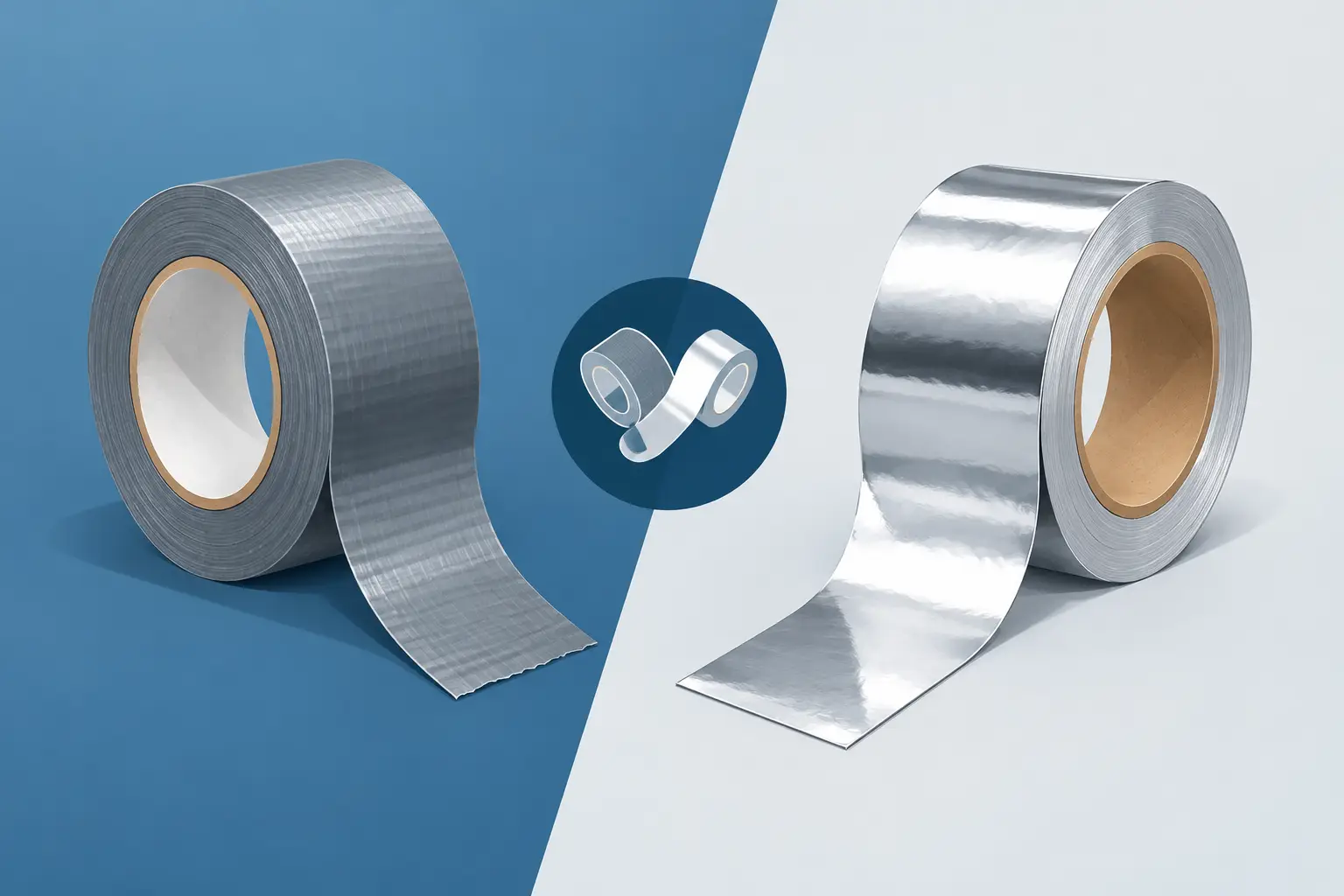
Duct tape typically combines a polyethylene-coated cloth backing with a pressure-sensitive adhesive. The cloth reinforcement gives it tear resistance, flexibility, and the ability to conform around irregular shapes. It can be torn by hand and applied quickly, which makes it valuable for temporary containment, packaging, masking, securing protective coverings, and light-duty repairs.
Foil tape uses an aluminum foil backing, usually paired with an acrylic, rubber-based, or butyl adhesive system depending on the product design. Its metal face delivers a clean seal over flat seams, resists moisture transmission, and tolerates elevated temperatures better than conventional duct tape. It is commonly used on HVAC duct seams, insulation facings, refrigeration lines, metal repairs, and reflective barrier systems.
The backing is only one part of the equation. Adhesive chemistry determines how the tape grabs the substrate, withstands heat, and ages over time. A professional specification should consider the complete construction, not simply the label on the roll.
When Duct Tape Is the Practical Choice
Duct tape earns its place when speed, flexibility, and mechanical hold matter more than a long-term airtight or vapor-tight seal. Its fabric reinforcement handles movement and irregular geometry well. On a job site, it can secure a temporary dust barrier, bundle cable protection, hold a loose component until scheduled repair, or patch a noncritical cover.
It is also easier to work around corners and uneven surfaces than foil tape. A duct tape backing can stretch and conform where a foil backing may wrinkle or crease. For temporary repairs on low-temperature, dry surfaces, that flexibility can save time without compromising the immediate task.
However, duct tape should not be selected because the word “duct” appears in its name. Standard cloth duct tape is generally not the correct material for permanent HVAC duct sealing. Heat cycling, dust, condensation, and aging can reduce adhesion, while the backing itself does not provide the same vapor barrier or temperature performance as a properly rated foil tape.
Where Foil Tape Delivers Better Results
Foil tape is the more dependable choice when the joint must remain sealed against air leakage, moisture vapor, or elevated temperature exposure. On metal ductwork, it lays down as a continuous metallic barrier across seams and penetrations. When the surface is properly prepared and the tape is firmly burnished, the result is cleaner and more durable than a general-purpose cloth tape repair.
For HVAC and MEP work, foil tape is often used to seal insulated duct wrap, close foil-faced insulation joints, repair minor damage to foil facings, and support vapor-barrier continuity. It can also be suitable for refrigeration insulation applications, provided the adhesive is rated for expected temperatures and condensation conditions.
The reflective foil surface is useful around heat-related applications, but it should not be confused with a cure for inadequate insulation or an improperly designed thermal system. Tape supports the assembly. It does not replace the specified insulation thickness, mechanical fastening, mastic, or approved sealing method.
Foil tape is less forgiving on rough, contaminated, or highly irregular surfaces. Sharp folds can create channels at the edges, and aluminum foil can tear if it is pulled aggressively during application. That is why surface preparation and correct installation pressure matter.
Temperature, Moisture, and Outdoor Exposure
Environmental conditions often decide the tape selection before the installer opens the carton. Conventional duct tape can perform well indoors for short-duration tasks, but high heat, cold cycling, ultraviolet exposure, and persistent moisture can weaken many formulations. Adhesive residue, edge lifting, and backing degradation are common signs that the product was placed outside its intended service conditions.
Foil tape generally performs better around heat and humidity, especially when it uses a quality acrylic adhesive. Still, performance is product-specific. Some foil tapes are designed for moderate-temperature insulation work, while others are engineered for higher-temperature HVAC or industrial applications. A tape should be selected by its technical temperature range, adhesion data, backing thickness, and application guidance rather than by appearance alone.
For exterior work, neither tape should be assumed to be permanent without checking its weathering and UV resistance. Exposure to sun, rain, salt air, and thermal movement creates a different demand than an indoor mechanical room. Use a tape specifically rated for exterior exposure, or specify another sealing system where movement, water pressure, or long-term weathering is critical.
Adhesion Depends on Surface Preparation
Even a premium tape cannot compensate for an unprepared substrate. Dust, oil, release agents, loose paint, moisture, and oxidation prevent the adhesive from contacting the surface uniformly. The failure may not appear immediately. It often shows up after temperature changes or after the system is placed into service.
Clean the surface with a method compatible with the substrate and allow it to dry fully. Remove loose insulation facing, corrosion, old adhesive, and damaged coatings. Apply the tape at the manufacturer’s recommended temperature whenever possible, then press it firmly across the full width. A hand roller or squeegee is especially valuable with foil tape because it helps eliminate air pockets and improves edge contact.
Overlap seams consistently and avoid stretching the tape during application. Stretching can create tension that pulls the edges away over time. On ductwork and insulation systems, a neat, continuous seal is not cosmetic work. It is part of the system’s air-control and vapor-control performance.
Do Not Ignore Code and System Requirements
Professional HVAC work may require tapes that meet specific listing requirements, such as UL 181 classifications for flexible air ducts and air connectors. The required tape type depends on the duct material, insulation system, local code, project specification, and manufacturer instructions. A foil appearance alone does not confirm compliance.
Procurement teams should verify the submittal data before standardizing a tape across multiple projects. Confirm the intended substrates, adhesive type, temperature limits, tensile characteristics, aging performance, and any required flame or smoke classifications. For critical installations, match the tape to the complete approved system, including mastic, insulation, mechanical fasteners, or vapor-barrier accessories where specified.
This approach reduces the risk of rejected work, call-backs, and inconsistent field decisions. It also gives installers a clear product standard rather than asking them to solve a material-selection problem at the point of use.
A Better Selection Method for Buyers and Crews
Choose duct tape when the task is flexible, temporary, low-temperature, and noncritical: bundling, holding, covering, or quick repairs where a long-term seal is not required. Choose foil tape when sealing metal seams, maintaining insulation facings, controlling vapor, or working around HVAC and thermal applications where durability is expected.
For demanding facilities, do not buy either category as a generic commodity. Specify the application first, then select a consistent tape construction that meets it. Consider surface type, expected temperature, moisture exposure, indoor or outdoor use, code requirements, and required service life. This produces a more reliable outcome than selecting the lowest-cost roll available.
The best tape decision is made before the crew reaches the work area. When the product is matched to the system and installed on a clean, prepared surface, it protects workmanship, reduces rework, and supports the dependable performance professional projects require.



Leave a Reply