


Best Sealant for Curtain Walls on Commercial Jobs
Curtain-wall leakage rarely begins with the glass. It usually begins at a joint where expected movement, substrate condition, and sealant capability were not matched correctly. The best sealant for curtain walls is not simply the product with the highest advertised strength. It is the sealant system that maintains adhesion, elasticity, and weather resistance across the actual materials and conditions of the building.
For contractors, fabricators, consultants, and procurement teams, that distinction affects more than appearance. A failed perimeter or glazing joint can lead to water intrusion, air leakage, staining, corrosion, occupant complaints, access costs, and expensive remedial work. Selecting the right material at the start protects the facade and the project schedule.
What the Best Sealant for Curtain Walls Must Do
A curtain wall is a moving assembly. Aluminum framing expands and contracts with temperature changes. Glass responds differently from metal. Panels, anchors, and structural slabs can move under wind loading, live loading, thermal cycling, and building settlement. The sealant must accommodate this movement without tearing, losing adhesion, or becoming excessively stressed at the bond line.
For exposed exterior joints, weather resistance is equally critical. The sealant faces UV radiation, rain, standing water in drainage paths, heat, cold, airborne contaminants, and cleaning chemicals. A product that performs well in a protected interior joint may not provide dependable service on a sun-exposed facade.
The correct specification also depends on the sealant’s role. A weatherseal joint keeps air and water out while allowing movement. A structural glazing sealant transfers design loads between glass or panels and the framing system. These are not interchangeable applications. Structural glazing requires a specifically engineered and approved system, including compatibility review, adhesion testing, and project-specific design verification.
Silicone Is Usually the Leading Choice for Exterior Weathersealing
For most exterior curtain-wall weatherseal applications, a high-performance neutral-cure silicone sealant is the practical first choice. Quality facade silicones retain flexibility through broad temperature swings, resist UV exposure, and adhere well to common curtain-wall materials such as glass, anodized aluminum, painted aluminum, and many coated metals.
Neutral-cure chemistry is generally preferred around sensitive substrates because it avoids the corrosive byproducts associated with some acetoxy-cure silicones. This matters where sealant contacts metal finishes, glazing components, or other materials that may be affected by acidic curing systems.
Silicone also has a long record in demanding facade conditions. Its movement capability helps it perform where joint dimensions change daily, while its resistance to sunlight supports long-term exterior exposure. That does not mean every silicone is suitable. Formulation quality, movement rating, adhesion profile, curing behavior, and compatibility with adjacent materials still need to be confirmed.
For routine perimeter sealing, mullion-to-mullion joints, glass-to-frame weatherseals, and similar exposed facade details, a professional-grade neutral silicone formulated for glazing and weathersealing is often the strongest technical fit.
When Other Sealant Chemistries May Be Appropriate
Polyurethane and hybrid polymer sealants can be valuable on certain curtain-wall-related details, particularly where paintability, abrasion resistance, or adhesion to construction substrates is a priority. They may be used around transitions to concrete, masonry, metal flashings, or back-of-house details, provided the joint movement and exposure demands remain within the product’s limits.
However, these materials are not automatic replacements for silicone in highly exposed glazing joints. Long-term UV stability, resistance to extreme temperature cycling, and performance against glass and aluminum should be evaluated carefully. Some formulations can discolor, chalk, harden, or lose performance sooner than a purpose-designed facade silicone when exposed to severe weather.
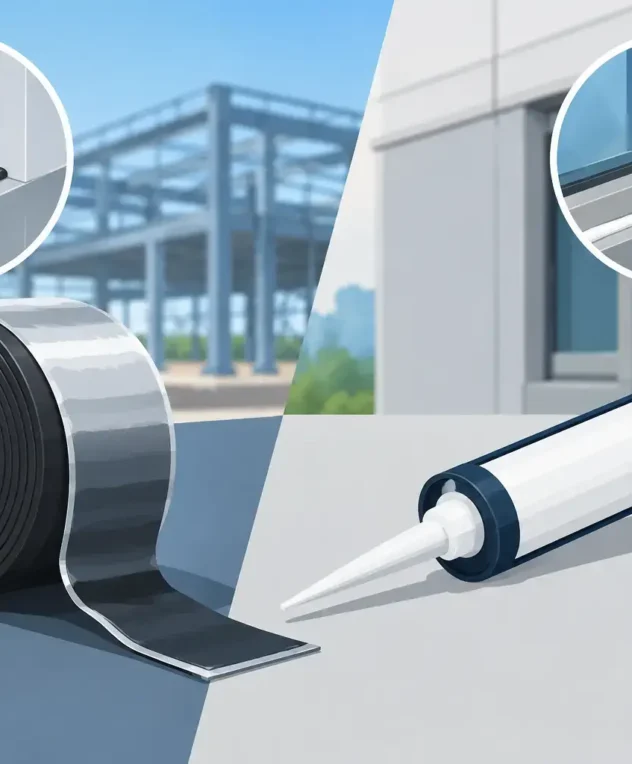
Butyl sealants and tapes have a role in concealed seals, lap joints, and certain fabrication details. They are not typically the primary choice for visible, high-movement exterior weatherseal joints. Acrylic sealants are generally better suited to low-movement interior work and should not be selected for critical exterior curtain-wall movement joints unless the product is specifically rated for that service.
The right answer depends on the joint function. Material chemistry should follow the engineering requirement, not purchasing habit.
Match the Sealant to the Joint Design
Even the highest-quality sealant will fail in a poorly designed joint. Joint geometry controls how the material stretches and compresses. If the sealant is installed too deep, it becomes constrained and may tear under movement. If it is too shallow, it may lack the body needed for reliable adhesion and weather protection.
A properly sized joint with a compatible backer rod allows the sealant to form a controlled hourglass profile. This geometry distributes movement through the sealant rather than concentrating stress at the substrate edges. The backer rod also prevents three-sided adhesion, which can severely reduce movement performance.
The joint width must account for anticipated movement, not just the gap visible during installation. Thermal movement in long aluminum members can be significant, especially on dark finishes and elevations with intense sun exposure. Designers and installers should follow the curtain-wall system supplier’s joint requirements and the sealant manufacturer’s published movement capability.
Do not use bond-breaker tape or backer rod as an afterthought. They are part of the joint system. The same applies to sealant depth, tooling, and curing conditions.
Verify Adhesion and Material Compatibility Before Installation
Curtain-wall assemblies often contain more material variations than expected. A single elevation may include anodized aluminum, powder-coated aluminum, fluoropolymer-coated metal, glass, gaskets, setting blocks, insulation, membranes, tapes, spacers, and cleaning residues. A sealant that bonds well to one surface may not bond reliably to another.
Adhesion testing should be completed on actual project substrates, including the final finish and any field-applied cleaning method. This is particularly important with factory coatings, low-energy surfaces, and materials that may carry oils, release agents, or protective-film residue.
Compatibility is also essential. Some sealants can react with, stain, soften, or be affected by adjacent gasket materials, tapes, coatings, and insulating glass components. In critical glazing systems, staining and compatibility evaluations are not paperwork. They help prevent visible facade defects and premature joint failure.
Primers may be required on specific substrates or in difficult conditions. A primer can improve bond reliability, but it must be approved for the sealant and surface being used. Do not assume a primer solves contamination, moisture, or poor surface preparation.
Installation Quality Determines Field Performance
The best product cannot compensate for installation on dirty, wet, or improperly prepared surfaces. Before sealing, joints should be clean, dry, sound, and free from dust, grease, loose coatings, old sealant residue, and incompatible cleaners. Cleaning methods must suit the substrate so that the preparation process does not damage the finish or leave a film that interferes with adhesion.
Application temperature and humidity also matter. Sealants cure according to their chemistry, and field conditions can change skin time, tooling time, and cure rate. In cold or highly humid conditions, crews need to follow the manufacturer’s limits instead of relying on normal-site assumptions.
After application, tool the sealant firmly to wet the joint faces and remove voids. A neat bead is not enough. The sealant must have continuous contact with both bonding surfaces. Inspecting joint preparation, backer rod placement, bead continuity, and tooling during installation is far less costly than tracing leaks after facade access equipment has been removed.
For professional construction and maintenance teams, The Engineer supports performance-focused sealing work with industrial solutions built for dependable site conditions. Product selection should still be confirmed against the exact joint, substrate, and exposure requirement.
A Practical Selection Process for Procurement and Project Teams
Start by separating structural glazing from weathersealing. If the joint transfers loads, use only a structural glazing sealant system approved for the design. If the joint manages air and water at the exterior face, evaluate a high-performance weatherseal silicone first.
Then review the expected joint movement, substrates, coating types, exposure level, required color, and any project-specific standards. Confirm adhesion and compatibility through testing rather than product assumptions. Finally, make sure the selected product can be supplied consistently in the required color, packaging, and project volume. A technically correct sealant that cannot be delivered reliably can create avoidable substitutions and quality risks.
Procurement should also look beyond cartridge price. The lower-cost option can become the expensive choice when it creates slow application, poor finish quality, adhesion failures, or early replacement work. Product consistency, batch control, technical documentation, and dependable supply all contribute to total project value.
Build the Facade Around Proven Joint Performance
A curtain wall is only as dependable as its interfaces. Choose a sealant that is engineered for the joint’s movement, exposure, and substrates, then protect that choice with sound joint design, verified compatibility, and disciplined installation. When those controls are in place, the sealant becomes what it should be: a durable working part of the facade, not the source of its next repair.


Leave a Reply