

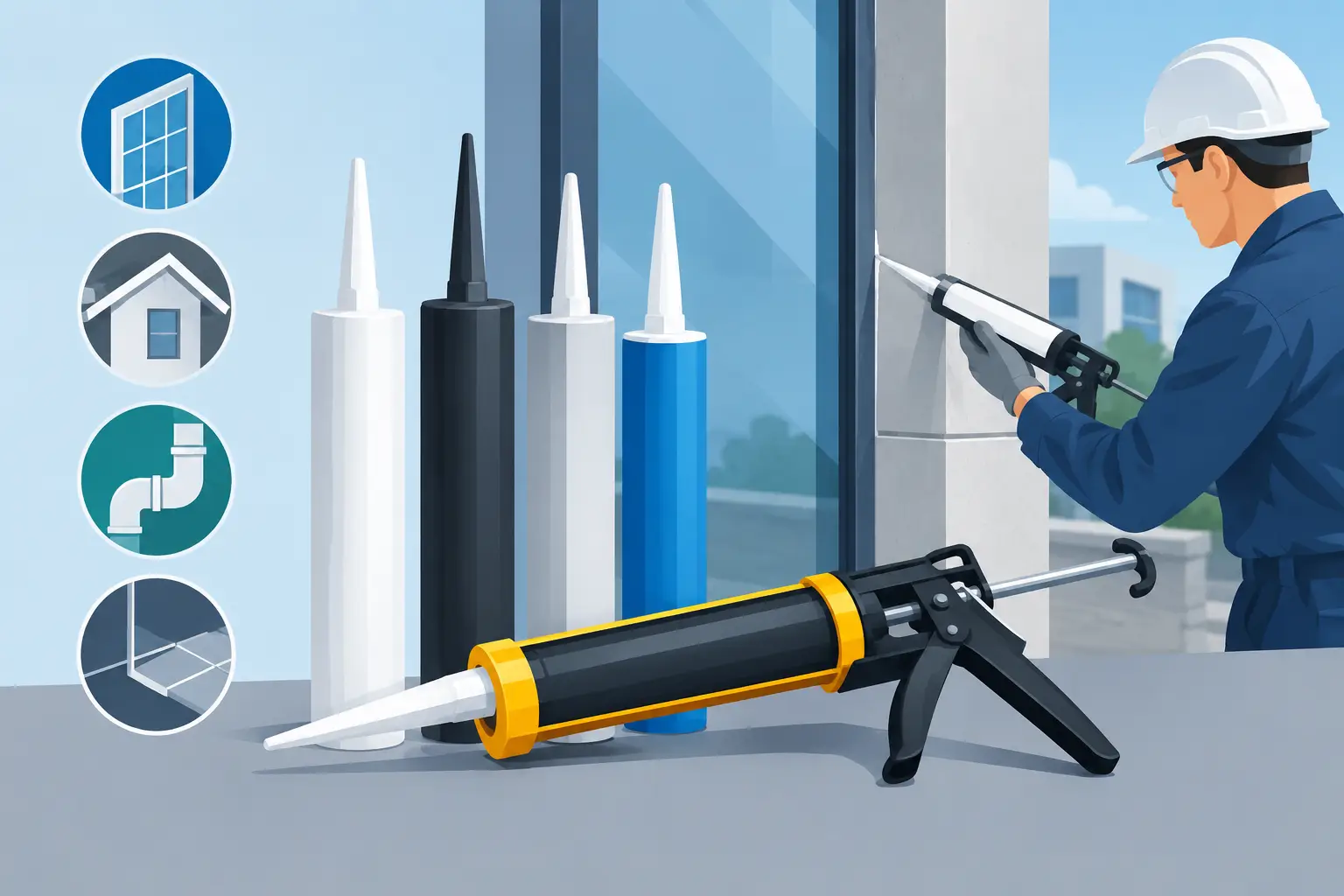
Polyurethane Sealant Selection Guide for Pros
A failed perimeter joint rarely begins with poor application alone. More often, the wrong sealant was specified for the movement, substrate, exposure, or production schedule. This polyurethane sealant selection guide helps contractors, maintenance teams, and procurement professionals select a material that performs under real service conditions, not just on the day it is applied.
Polyurethane sealants are valued for strong adhesion, flexibility, abrasion resistance, and long-term durability. They are a practical choice for many construction, industrial, automotive, and MEP applications. But polyurethane is not one universal answer. Selecting the right grade requires a clear view of the joint and the environment it must withstand.
Polyurethane Sealant Selection Guide: Start With the Joint
The joint is the first specification point. Before reviewing cartridge size, color, or pricing, determine whether the sealant must accommodate movement, bond two static materials, resist traffic, or provide a weather seal.
Expansion and control joints need a flexible sealant with movement capability matched to expected expansion, contraction, vibration, and building settlement. A sealant that is too rigid can split at the bond line. One selected without sufficient movement capacity may tear through the body of the joint. For dynamic joints, the specified movement rating and correct joint geometry matter as much as the sealant chemistry.
Static gaps around frames, panels, ducts, and equipment often place greater emphasis on adhesion and weather resistance than on high movement capacity. Polyurethane can perform well here, provided the surfaces are stable and properly prepared. If the joint is unusually deep, use a compatible backer rod to control sealant depth and establish a two-sided bond. Three-sided adhesion restricts movement and can lead to early failure.
For floor joints, loading must be considered separately from movement. Forklifts, wheeled carts, foot traffic, and dropped tools can damage a soft sealing compound. A traffic-grade polyurethane sealant may be appropriate when the joint also needs flexibility, but the application should be evaluated for wheel loads, chemical exposure, and the expected maintenance cycle.
Match the Sealant to the Substrate
Polyurethane sealants bond effectively to many common job-site materials, including concrete, masonry, metal, wood, and certain coated surfaces. That does not mean every substrate should be treated the same way.
Concrete must be clean, sound, and sufficiently dry. Dust, curing compounds, laitance, old coatings, and weak surface layers reduce adhesion. In repair work, remove failed sealant fully rather than bonding to unknown residue at the edges. Fresh concrete also needs adequate cure time. A joint may look dry while still releasing moisture that affects sealant performance.
Metal introduces another set of variables. Bare steel, galvanized steel, aluminum, and painted metal may require different cleaning methods or primers. Oil from fabrication, protective films, oxidation, and powder-coated finishes can all interfere with adhesion. When sealing HVAC penetrations, metal cladding, equipment housings, or vehicle assemblies, test adhesion on the actual surface rather than relying only on a generic material description.
Plastics require particular caution. Some plastics have low surface energy, contain plasticizers, or are affected by solvents in primers and cleaners. Polyurethane may be suitable for certain rigid plastics, but not every plastic surface is a dependable bonding partner. If the application involves PVC, acrylic, polycarbonate, fiberglass, or composite panels, confirm compatibility through technical data and a field adhesion test.
Painted surfaces should be treated as a coating system, not simply as metal or concrete. The sealant may adhere well to the paint while the paint itself detaches from the substrate. Where coating failure would create a leak path or safety concern, verify both coating integrity and sealant compatibility.
Evaluate Exposure Before Selecting a Grade
Outdoor joints face UV radiation, rainfall, temperature cycling, dust, and wind-driven water. A high-quality polyurethane sealant can provide durable weather sealing, but constant exposure conditions should guide the final selection. If appearance retention is critical on visible façades, review color stability and surface weathering requirements. Some projects may favor a different chemistry for maximum UV appearance retention, even when polyurethane offers better mechanical toughness.
Water exposure also changes the decision. A sealant used around exterior window perimeters experiences intermittent rain. A sealant in a tank room, wash bay, drainage channel, or submerged location faces far more demanding conditions. Do not assume that a weatherproof sealant is suitable for continuous water immersion. The product data must explicitly support the intended exposure.
Chemical resistance is equally application-specific. Workshops, factories, garages, and maintenance areas may expose joints to fuels, oils, coolants, cleaning agents, hydraulic fluids, or mild chemicals. Polyurethane generally provides good durability for many industrial uses, but concentrated chemicals and repeated spill exposure can require a specialized solution. Identify the actual fluids, concentration, temperature, and contact duration before approval.
For high-temperature equipment, ductwork, or production areas, check service temperature after cure rather than relying on the application temperature range. A sealant that dispenses and cures in cool weather may still be unsuitable next to hot machinery or exhaust components.
Cure Conditions Affect Schedule and Performance
Polyurethane sealants typically cure through reaction with moisture. Temperature, humidity, joint depth, and ventilation influence the rate of skin formation and through-cure. This matters when a joint must be painted, exposed to rain, put into service, or subjected to traffic on a fixed schedule.
Cool, dry conditions slow curing. Deep joints also cure more slowly because moisture reaches the center over time. In a fast-moving project, selecting a faster-curing polyurethane may reduce waiting periods, but it can also shorten tooling time. Teams need enough open time to apply a clean, continuous bead and tool it correctly.
Moisture on the substrate is not the same as the humidity needed for cure. Standing water, frost, or wet surfaces can compromise adhesion and produce defects. Follow the stated application limits for the selected product, especially during exterior work, cold-weather maintenance, and early-morning installation.
If the sealed joint will be painted, confirm paintability after the required cure period. Paint systems can crack when applied over a moving joint, and some coatings may not adhere properly to certain sealant surfaces. For visible architectural work, complete a small mock-up with the actual paint and substrate.
Select Packaging and Viscosity for the Work Method
The best formulation can still underperform when packaging does not fit the installation process. Cartridges are practical for repair work, detailing, small runs, and controlled application around frames and penetrations. Sausages can improve productivity on larger jobs and reduce packaging waste. Bulk systems may suit manufacturing lines or repetitive assembly operations where dispensing equipment is already in place.
Viscosity affects bead control and placement. A non-sag polyurethane is useful on vertical joints, overhead work, and wide façade gaps because it stays where it is applied. A self-leveling grade is designed for horizontal joints and can flow into place with less tooling. Using a self-leveling material on a wall joint creates mess and waste; using a stiff non-sag material in a narrow horizontal floor joint can leave voids.
Choose the nozzle opening to match the joint width, then apply enough material to contact both joint faces. Tooling is not cosmetic. It presses sealant into the substrate, removes air pockets, and creates the profile needed for movement and water shedding.
Build Quality Control Into Procurement
Procurement decisions should account for more than a unit price. A low-cost sealant that varies between batches, skins too quickly, or lacks dependable adhesion can create rework costs far beyond its initial savings. Specify the required movement class, color, packaging, cure expectations, temperature range, and substrate approvals before ordering.
For projects with repeated installations, ask for technical documentation, batch traceability, shelf-life control, and a consistent supply plan. Store polyurethane sealant within its recommended temperature range and rotate stock by date. Expired or improperly stored material may cure unpredictably, even when the cartridge looks acceptable.
A site trial is valuable when conditions are demanding or substrates are uncertain. Apply a representative sample, allow the required cure time, then inspect the bead for adhesion, cohesion, staining, and compatibility with adjacent materials. This small step is particularly useful on coated metals, porous stone, unusual plastics, and high-movement assemblies.
The Engineer polyurethane sealant range should be selected with the same discipline applied to every critical consumable: match the formulation to the joint, confirm the substrate, and plan for the environment it will face. When the specification reflects real operating conditions, the finished joint is better positioned to protect the structure, reduce maintenance, and keep work moving.


Leave a Reply