

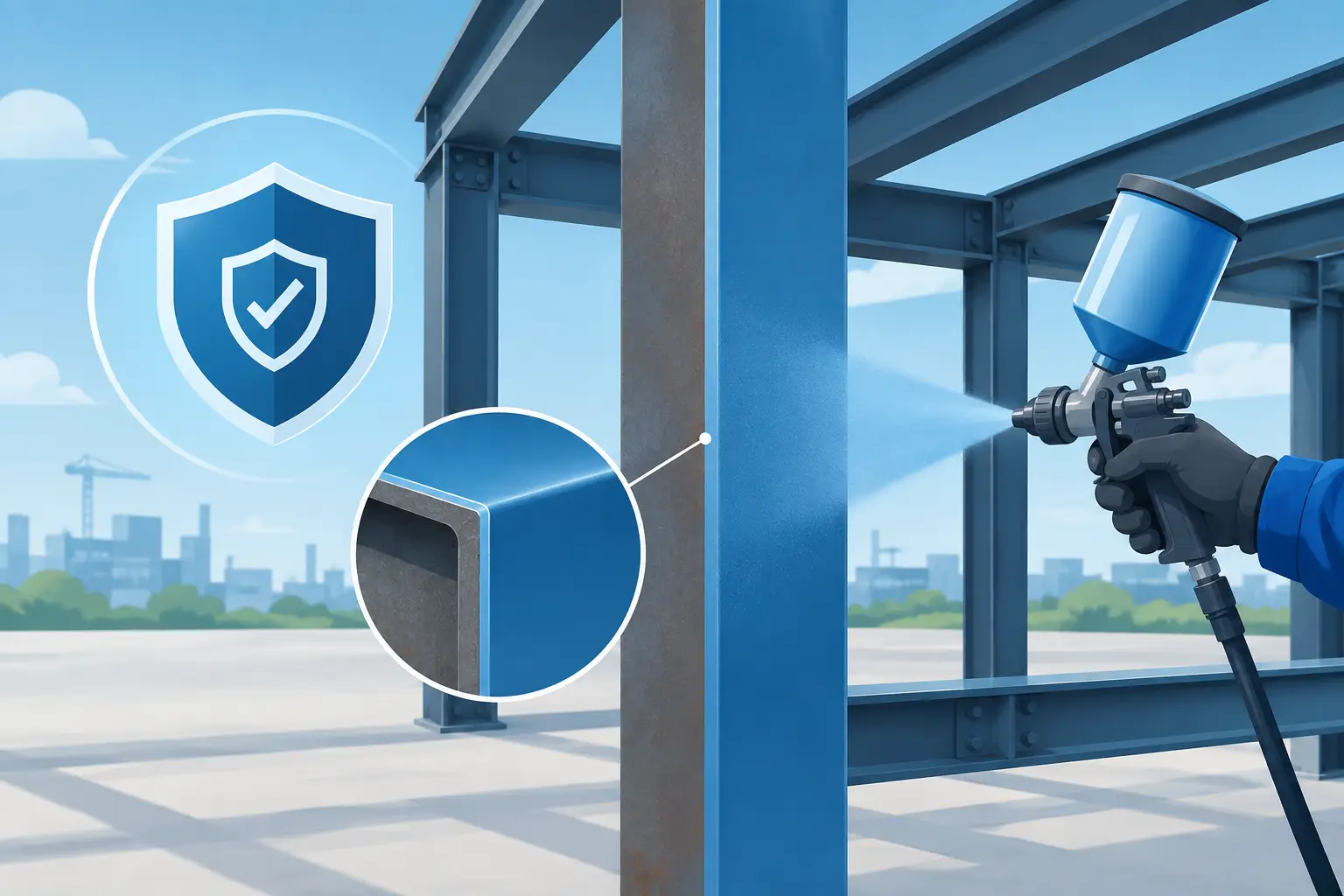
Protective Coating for Steel Structures That Lasts
A steel handrail can begin corroding at a weld before the project team has completed final turnover. A structural frame near the coast can lose coating adhesion after one poorly prepared application cycle. The right protective coating for steel structures is not simply a finish. It is a controlled protection system that keeps moisture, salts, chemicals, and industrial contaminants away from the steel surface.
For contractors, maintenance teams, and procurement managers, the cost of coating failure extends beyond paint consumption. It creates shutdowns, access costs, safety concerns, corrosion repairs, and avoidable rework. Selecting the right system starts with understanding the service environment, preparing the substrate correctly, and verifying each stage of application.
Steel Protection Starts With the Real Exposure Risk
Steel does not corrode at the same rate in every location. Indoor structural steel in a dry warehouse faces a very different risk from pipe supports at a coastal facility, a rooftop HVAC platform, or a manufacturing line exposed to washdowns and chemical vapors.
Humidity and standing water are obvious threats, but they are not the only ones. Chlorides from coastal air, deicing salts, condensation beneath insulation, airborne pollutants, abrasion, and temperature cycling can all reduce coating life. Sharp edges, bolted joints, welds, and crevices require particular attention because they are frequent starting points for coating breakdown.
The practical question is not, “What is the strongest coating?” It is, “What coating system will perform under this structure’s actual operating conditions?” A coating designed for general atmospheric exposure may be a sound commercial choice for indoor steel. The same product may be inadequate for a marine terminal, wastewater facility, processing plant, or high-temperature mechanical area.
Choose a Protective Coating System, Not a Single Product
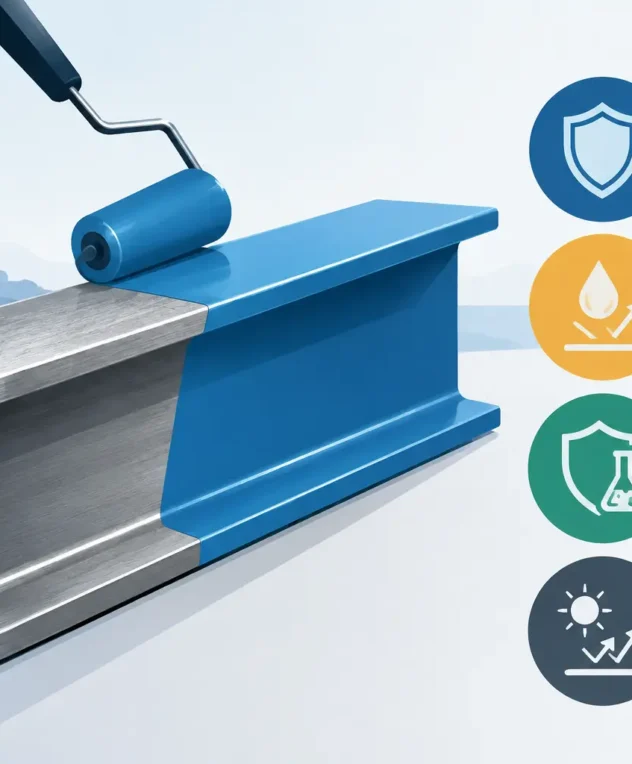
A durable coating strategy is usually built in layers. Each layer performs a separate job: the primer bonds to the steel and supports corrosion resistance, the intermediate coat builds barrier thickness, and the topcoat provides weathering, color retention, and additional environmental protection.
For many projects, the coating system should be selected around four performance requirements:
- Corrosion resistance for moisture, salt spray, condensation, and industrial atmospheres
- Chemical resistance where oils, solvents, cleaning agents, fuels, or process chemicals are present
- Mechanical durability for abrasion, impact, handling, and maintenance traffic
- UV and weather resistance for exterior steel exposed to direct sun, rain, and temperature changes
Epoxy primers and epoxy intermediate coats are widely used where strong adhesion and corrosion protection are required. Their trade-off is limited resistance to prolonged ultraviolet exposure, which is why they are often protected with a weather-resistant finish coat. Polyurethane topcoats are frequently specified for exterior durability and color stability. Zinc-rich primers can provide added cathodic protection in severe corrosion environments, but they require compatible application conditions and careful control of film thickness.
For less demanding indoor applications, a simpler system may provide dependable value. For aggressive environments, a higher-build multi-coat system may cost more at installation but reduce repair frequency and lifecycle expense. The correct decision depends on exposure, expected service life, access for future maintenance, and the consequences of failure.
Surface Preparation Determines Coating Performance
Even advanced coating chemistry cannot compensate for a contaminated or poorly prepared substrate. Surface preparation is the foundation of adhesion. If rust, mill scale, oil, dust, soluble salts, or loose existing coating remains on the steel, the applied film may fail prematurely.
New steel often requires removal of mill scale and fabrication residues. Previously coated steel needs a realistic assessment of the existing coating, including adhesion, corrosion beneath the film, and compatibility with the planned repair system. Areas with active corrosion should be cleaned back to a sound surface rather than covered over.
Abrasive blasting is commonly used when high-performance protection is required because it produces a clean profile that helps the primer anchor to the steel. Power-tool cleaning may be suitable for localized maintenance where blasting is impractical, but it generally delivers a different surface condition and should be matched to the coating manufacturer’s requirements.
Preparation also includes details that are easy to overlook on a busy job site. Weld spatter should be removed. Sharp edges should be rounded where practical. Bolts, seams, corners, and welds often need stripe coating before the full coat is applied. These areas do not naturally receive the same film build as flat surfaces, yet they are often the first locations to corrode.
Control the Conditions During Application
A specified coating system can still fail if it is applied outside its operating range. Surface temperature, air temperature, relative humidity, dew point, ventilation, and curing time all affect film formation and adhesion.
Steel must be dry and above the dew point by the margin specified for the product. Applying a coating onto steel that is close to condensation can trap moisture at the interface, even when the surface appears dry. This can lead to blistering, underfilm corrosion, or early loss of adhesion.
Film thickness must also be measured, not assumed. Applying too little coating reduces barrier protection and may leave high-risk edges exposed. Applying too much can cause sagging, solvent entrapment, cracking, or delayed cure. Wet-film checks during application and dry-film measurements after cure give project teams measurable confirmation that the specified system has been installed.
For spray application, equipment setup, nozzle selection, pressure, and operator technique affect consistency. Brush and roller application can be effective for repairs, stripe coats, and smaller areas, but they demand attention to coverage and overlap. The method should fit the structure, the coating material, access limitations, and the required finish quality.
Inspection Protects the Asset and the Schedule
Inspection should not be treated as a final paperwork exercise. It is a working control process that begins before surface preparation and continues through curing. Early checks prevent a small defect from becoming a large remediation scope.
A disciplined inspection process verifies the surface condition before priming, confirms environmental readings during application, records batch information and mixing ratios, and measures film build for every coat. Visual checks identify misses, pinholes, runs, dry spray, edge coverage issues, and mechanical damage. Where the specification calls for it, holiday testing can help identify discontinuities in protective linings and high-build systems.
Documentation matters for commercial reasons as well as technical ones. Clear records help contractors demonstrate compliance, allow owners to plan future maintenance, and give procurement teams confidence that the supplied materials were applied under controlled conditions.
Plan Maintenance Before Corrosion Returns
No coating should be treated as permanent. Even premium systems experience wear from sunlight, impact, cleaning, vibration, and environmental exposure. The goal is to identify small defects while repair remains fast, contained, and cost-effective.
Routine inspections should focus on water-trapping details, damaged areas, welds, fasteners, edges, and locations exposed to chemical splash or abrasion. A small coating repair completed early can prevent corrosion from traveling beneath the surrounding film. Maintenance teams should use compatible materials and follow the required preparation standard rather than applying an unverified touch-up product over a failed surface.
For large portfolios of facilities or distributed projects, standardizing approved coating systems also improves supply reliability and application consistency. It simplifies training, purchasing, inspection, and future repair planning without forcing every structure into the same specification.
Build Protection Around Performance
The best protective coating for steel structures is the one that matches real exposure conditions, reaches the required film build, and remains supported by disciplined application and inspection. Material quality matters, but system control matters just as much.
For professional projects, The Engineer performance-led range supports the practical objective behind every coating decision: keep steel protected, reduce rework, and maintain dependable service where the structure has to perform.

Leave a Reply