

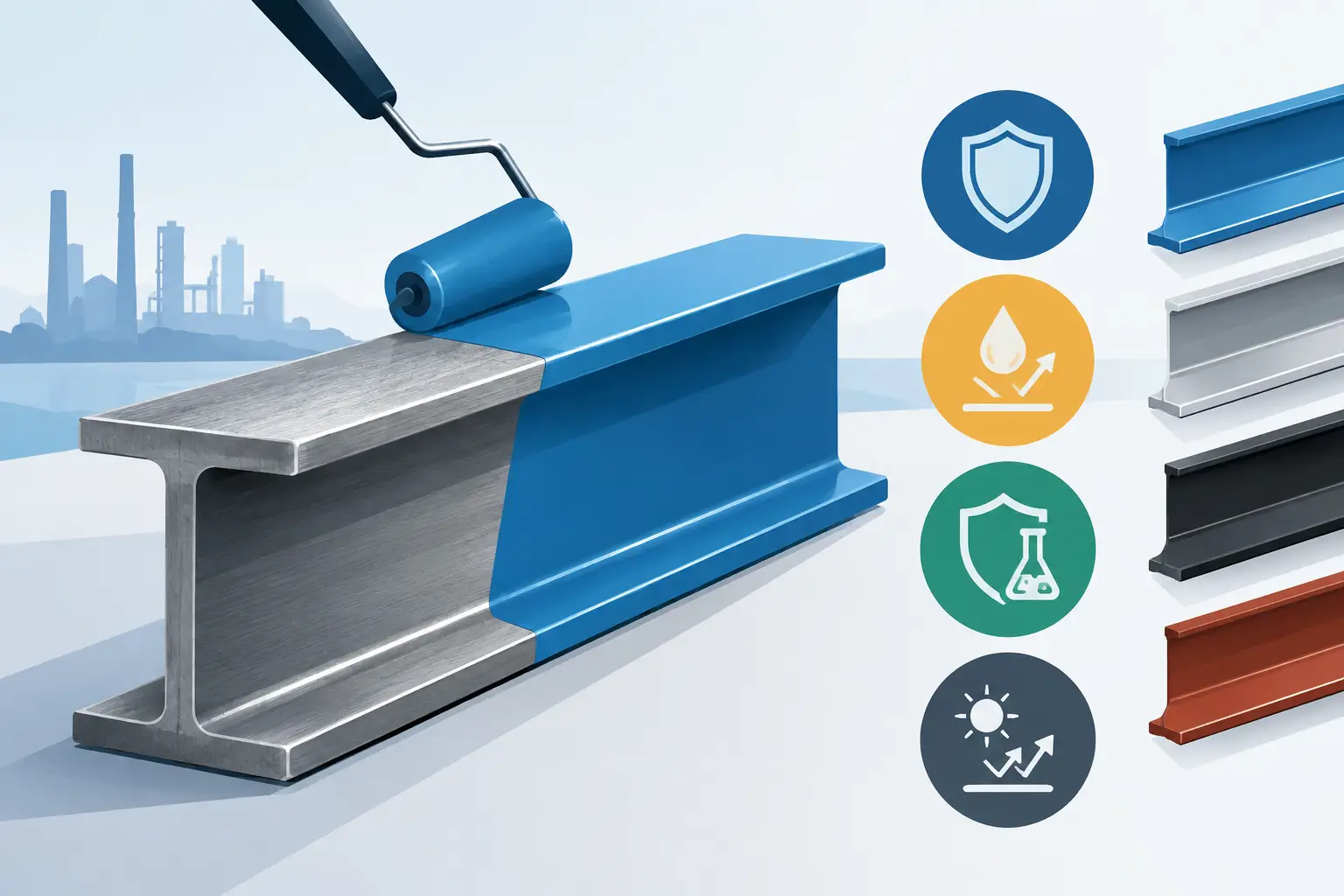
Best Coatings for Steel Protection by Service
Steel does not fail because a coating looked acceptable on day one. It fails when moisture reaches an unprepared edge, when a solvent attacks the wrong resin, or when a coating system cannot withstand the actual operating temperature. The best coatings for steel protection are selected around service conditions, surface preparation, and application control – not color, price per can, or a generic corrosion claim.
For contractors, maintenance teams, workshop operators, and procurement managers, the right choice protects more than metal. It reduces repainting, unplanned shutdowns, warranty exposure, and labor spent correcting preventable failures.
Start With the Exposure, Not the Coating Name
Steel protection begins with an accurate view of what the asset will face. An indoor structural support in a dry warehouse has different requirements than outdoor handrails, HVAC equipment near a coast, a vehicle underbody, or process equipment exposed to chemicals. One coating category cannot provide the same performance in every setting.
Ask practical questions before specifying a system. Will the steel see standing water, condensation, salt spray, UV exposure, abrasion, chemical splash, elevated temperatures, or frequent cleaning? Is the coating being applied in a controlled workshop or on an active job site? Can the surface be blast cleaned, or must the work be completed with hand tools and limited access?
These answers determine the required resin, primer, film build, and topcoat. They also reveal when a simple coating solution is sufficient and when a multi-coat protective system is the better commercial decision.
Best Coatings for Steel Protection in Common Conditions
Zinc-Rich Primers for High-Corrosion Steelwork
Zinc-rich primers are among the strongest choices for steel exposed to demanding atmospheric corrosion. Their value comes from sacrificial protection: zinc corrodes preferentially, helping protect the underlying steel when the coating film is damaged. They are widely used on structural steel, industrial frames, pipelines, tanks, and fabricated equipment.
Zinc-rich systems perform best over properly prepared bare steel, typically with a clean, profiled surface. They are not a shortcut for poor preparation. If mill scale, oil, salts, or loose rust remain, the primer cannot establish the bond needed for long-term performance.
For exposed exterior steel, zinc-rich primer is often paired with an epoxy intermediate coat and a durable finish coat. This layered approach costs more initially, but it can deliver meaningful savings where access for maintenance is difficult or downtime is expensive.
Epoxy Coatings for Moisture, Chemicals, and Wear
Epoxy coatings are a dependable industrial choice where steel must resist water, humidity, chemical exposure, and mechanical wear. Their strong adhesion and dense film make them suitable for machinery, process areas, floors, tanks, structural components, and maintenance repairs.
Epoxy is particularly valuable as a build coat in a corrosion-control system. It adds barrier protection, helping slow the movement of water and corrosive agents toward the steel. High-build epoxy can also help create the dry film thickness required for aggressive service environments.
The trade-off is UV stability. Many epoxies chalk or fade under prolonged sunlight. This does not always mean the protective film has failed, but it can affect appearance and eventually maintenance planning. For visible outdoor assets, specify an ultraviolet-resistant topcoat over the epoxy.
Polyurethane Topcoats for Exterior Finish and Color Retention
Polyurethane coatings are a strong finishing option for exterior steel where appearance matters alongside protection. They offer good weather resistance, color retention, and gloss retention, making them well suited to equipment, railings, architectural steel, trailers, vehicle components, and exposed fabricated assemblies.
A polyurethane topcoat is usually not the complete corrosion solution on bare steel. It works best as the final layer over a suitable primer and, where required, an epoxy intermediate coat. In that role, it protects the underlying system from sunlight, weathering, and routine contact while maintaining a professional finish.
For commercial projects, this distinction matters. Selecting polyurethane because it looks good, without confirming the primer system beneath it, can result in premature underfilm corrosion even while the surface initially appears sound.
Alkyd and Enamel Coatings for General Maintenance
Alkyd and enamel coatings remain practical for general-purpose steel maintenance, light-duty equipment, interior metalwork, and routine touch-up applications. They are often easier to apply than two-component systems and can be a cost-effective option where exposure is moderate and fast, straightforward maintenance is the priority.
They are not the first choice for severe coastal exposure, chemical processing areas, immersion service, or high-abrasion environments. Their performance depends heavily on keeping expectations aligned with the duty cycle. For a dry indoor framework or a regularly maintained workshop fixture, they can be highly effective. For a coastal pipe rack, a higher-performance system is normally justified.
Moisture-Cured and Specialized Coatings for Difficult Repairs
Some maintenance situations involve damp steel, limited shutdown windows, awkward geometry, or old coatings that cannot be fully removed. Moisture-cured urethanes and specialized surface-tolerant coatings can provide a practical route where ideal preparation is not possible.
These products should be selected carefully. Surface tolerance does not mean surface preparation is irrelevant. Loose corrosion, contamination, and failed existing paint must still be removed. The advantage is that the coating may tolerate residual staining, lower preparation standards, or higher ambient humidity better than a conventional system.
For repair work, test compatibility with the existing coating whenever possible. A technically strong product can still fail if it lifts, softens, or loses adhesion over an incompatible previous finish.
Surface Preparation Decides Coating Life
The coating system gets most of the attention, but surface preparation usually decides whether that system achieves its design life. Steel must be clean, dry where required, and free from oil, dust, soluble salts, loose rust, and poorly adhered coating. Sharp edges, weld spatter, and crevices also deserve attention because coatings naturally pull away from edges and thin out over irregular surfaces.
Abrasive blast cleaning provides the strongest foundation for high-performance systems because it removes contamination and creates an anchor profile for mechanical adhesion. Where blasting is not practical, power-tool cleaning can support many maintenance systems, provided specifications match the lower preparation standard.
Do not overlook environmental conditions during application. Condensation on steel, excessive humidity, a substrate that is too cold, or incorrect thinning can compromise adhesion before the coating has cured. Measure surface temperature and confirm it remains above the dew point by the coating manufacturer’s required margin.
Build a System, Not a Single Coat
For low-risk indoor service, a direct-to-metal coating may be an efficient solution. For demanding industrial or exterior service, think in layers: primer for adhesion and corrosion control, intermediate coat for barrier build, and topcoat for weathering, appearance, and additional resistance.
Dry film thickness is equally important. A thin coat may look even but fail to provide the barrier specified for the environment. An excessively heavy coat can trap solvent, sag, crack, or cure poorly. Application teams should use the correct spray, brush, or roller method and verify film thickness during the job rather than after failure occurs.
This is where reliable supply and product consistency matter. Contractors and distributors need coatings that perform predictably from one project phase to the next, supported by clear application guidance and a practical range for primers, maintenance finishes, and repair work. The Engineer range is built around that performance-led approach for professional industrial applications.
Match the Coating to the Real Cost of Failure
The lowest purchase price is rarely the lowest installed cost. Consider access, labor, shutdown time, expected service life, and the consequence of corrosion reaching the substrate. A coating system for a readily accessible indoor rack can be simple and economical. A system protecting elevated exterior steel, essential HVAC supports, or production equipment should be selected for longer service and fewer interventions.
Document the selected system before work starts: surface-preparation method, primer, coat count, target film thickness, cure times, environmental limits, and inspection points. This gives procurement teams, applicators, and project managers one standard to follow.
Choose steel protection with the same discipline used to select the steel itself. When the coating matches the environment and the application is controlled from preparation through cure, the result is not just a better-looking surface – it is a longer-lasting asset with fewer avoidable maintenance demands.
Leave a Reply