

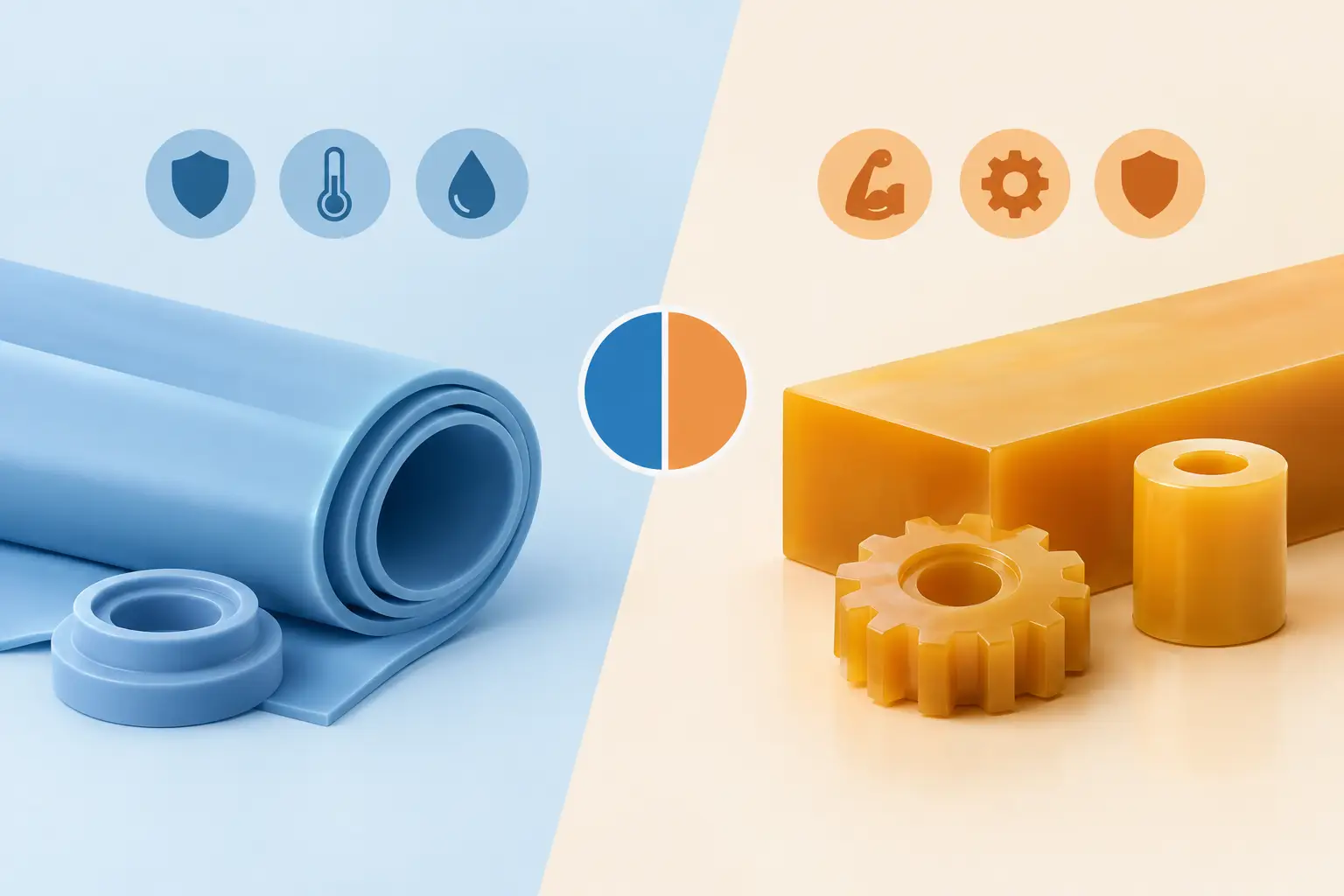
Silicone Versus Polyurethane: Which Performs?
A failed joint rarely starts with the wrong tube. It starts when a material is selected for a condition it was not designed to handle: a façade joint that moves every day, a painted metal panel, a wet service area, or a bond exposed to vibration and heat. The silicone versus polyurethane decision affects adhesion, appearance, maintenance intervals, and the risk of costly rework.
Both materials are established professional sealant technologies. Neither is universally better. Silicone is often the stronger choice for long-term weather exposure and high joint movement. Polyurethane is often preferred where tough adhesion, abrasion resistance, and paintability matter. The correct specification depends on the substrate, joint design, environment, and finishing requirements.
Silicone Versus Polyurethane at a Glance
Silicone sealants cure into flexible elastomers that retain movement capability across a wide temperature range. Their resistance to UV exposure, rain, ozone, and thermal cycling makes them a dependable choice for exterior glazing, perimeter joints, curtain wall interfaces, sanitary areas, and many HVAC or MEP penetrations. High-quality silicone can remain elastic for years in direct sunlight without becoming brittle.
Polyurethane sealants also cure into flexible, durable compounds, but their performance profile is different. They typically deliver strong adhesion to common construction materials, including concrete, masonry, wood, and many metals. They form a tougher surface than silicone, which can be valuable in traffic-adjacent joints, industrial assemblies, and repair work where mechanical stress is a concern.
The practical distinction is simple: silicone is generally selected for weatherability and sustained movement, while polyurethane is frequently selected for tenacious bonding, toughness, and a finish that can usually be painted. That distinction must still be checked against the specific product data, as formulation quality and substrate preparation determine real-world results.
Where Silicone Performs Best
Exterior exposure and movement joints
Silicone is widely used where sunlight, rain, temperature swings, and repeated expansion and contraction are part of normal service. Glass-to-frame glazing, aluminum composite panels, window perimeters, and exterior cladding interfaces all place high demands on flexibility and UV resistance.
A sealant in these locations needs to move with the assembly without losing adhesion at the bond line. Silicone is particularly effective when the joint is correctly sized, the surfaces are clean, and the required primer is used where specified. Its long-term resistance to environmental aging can reduce premature cracking and replacement work.
Wet areas and sanitary applications
In kitchens, washrooms, laboratories, and food-service support areas, silicone is commonly chosen for its water resistance and ability to remain flexible in humid conditions. Sanitary-grade silicone formulations may include fungicide protection to help control mold growth in suitable applications.
This does not mean every silicone is appropriate for every wet area. Chemical exposure, cleaning routines, and hygiene requirements should guide the product selection. A general-purpose silicone should not automatically be substituted for a purpose-designed sanitary or neutral-cure formulation.
Sensitive substrates and metal compatibility
Neutral-cure silicones are often favored around glass, aluminum, coated metals, and certain plastics because they avoid the corrosive byproducts associated with acetoxy-cure systems. For façade, glazing, and MEP work, cure chemistry matters. Using the wrong type can create staining, corrosion concerns, or weak long-term adhesion on sensitive materials.
Where Polyurethane Performs Best
Construction bonding and repair work
Polyurethane is valued on demanding construction sites because it bonds strongly to many porous and nonporous surfaces. Concrete-to-metal transitions, masonry cracks, precast panels, timber joints, and general building repairs can benefit from its adhesion and tough cured body.
For contractors, this makes polyurethane a practical option when a joint or bond must tolerate handling, vibration, or minor impact. It is often used where a softer silicone surface could be more vulnerable to physical damage.
Paintable joints and finished surfaces
One of polyurethane’s most useful advantages is paintability. Many polyurethane sealants can be coated after curing, allowing the joint to blend with surrounding wall, panel, or trim finishes. This is especially relevant in architectural finishing, vehicle body repair, fabricated equipment, and maintenance work where appearance is part of the specification.
Paint compatibility still needs verification. Coating too early, using an incompatible paint system, or applying paint beyond its allowable film thickness can lead to cracking, discoloration, or adhesion failure. A paintable sealant is not a substitute for a properly matched coating system.
Tough service conditions
Polyurethane’s abrasion resistance and mechanical toughness can make it a sound choice for floor joints, warehouse repairs, vehicle-related applications, and industrial assemblies. In these environments, movement is only one part of the requirement. The material may also face wheel traffic, cleaning, dust, occasional impact, and repeated vibration.
UV exposure is the main trade-off. Standard polyurethane formulations may chalk, discolor, or degrade when left exposed to strong sunlight over long periods. For exterior work, confirm that the formulation is rated for the expected exposure or protected by an approved coating system.
Selection Factors That Prevent Rework
The strongest specification begins with the joint, not the product category. Consider the following factors before choosing a sealant.
- Movement capability: Expansion joints around panels, windows, and metal assemblies require a sealant rated for the anticipated movement. Joint geometry, including width-to-depth ratio, is equally important.
- Substrate condition: Concrete dust, oil, release agents, oxidation, moisture, and old sealant residue can all reduce adhesion. Surface preparation is a performance requirement, not a housekeeping step.
- Environmental exposure: Direct UV, standing water, chemicals, heat, vibration, and service temperature can quickly eliminate unsuitable options.
- Finishing needs: If the joint must be painted, polyurethane may be the more practical choice. If color retention and long-term outdoor appearance are critical, silicone may offer an advantage.
- Cure conditions: Temperature, humidity, joint depth, and ventilation affect skin time and full cure. Plan work sequencing around the actual site conditions rather than the label’s ideal conditions.
For wide or deep movement joints, use the correct backing material to control sealant depth and create the intended bond profile. Three-sided adhesion can restrict movement and contribute to cohesive tearing. This installation detail is often as important as the choice between silicone and polyurethane.
Adhesion Is Not the Same as Compatibility
A sealant can appear to bond well on the day of installation and still fail later because the substrate or adjacent material was incompatible. Plasticizers in some membranes, coatings on aluminum, bituminous materials, and certain painted surfaces may cause staining, softening, or loss of adhesion over time.
Test patches are a disciplined way to reduce this risk, particularly on coated panels, engineered stone, specialty plastics, or assemblies with multiple manufacturers involved. For critical façade, glazing, or industrial production work, follow the project specification and product technical guidance on primers, cleaning agents, and compatibility testing.
This is also where dependable supply matters. Changing sealant brands or formulations mid-project without confirming equivalency can introduce variations in cure behavior, color, adhesion, and warranty conditions. Procurement teams should evaluate performance consistency alongside unit cost.
Common Selection Errors
The first common error is using silicone where a paintable finish is required, then trying to force paint adhesion afterward. Most paints do not bond reliably to cured silicone. If painting is mandatory, specify a paintable polyurethane or another approved system from the start.
The second is using standard polyurethane in a permanently sun-exposed exterior joint without considering UV stability. A tough sealant can still age poorly if the environment exceeds its intended use. Select a UV-rated product or use an approved protective finish where appropriate.
The third is treating all silicones or all polyurethanes as interchangeable. Cure type, modulus, movement rating, adhesion profile, color range, and chemical resistance vary substantially between products. The label category provides a starting point, not a complete specification.
Specify for Service, Not for Habit
For glazing, exterior perimeter joints, wet areas, and high-movement weather seals, silicone will often provide the longer-lasting answer. For paintable construction joints, repair bonding, mechanically demanding areas, and many industrial maintenance tasks, polyurethane may provide the stronger fit.
The Engineer range is built for professionals who need predictable performance across construction, automotive, MEP, and maintenance work. Select the sealant that matches the actual service condition, prepare the joint correctly, and verify compatibility before full application. That is how a sealed joint becomes a reliable part of the system rather than the next source of downtime.


Leave a Reply