

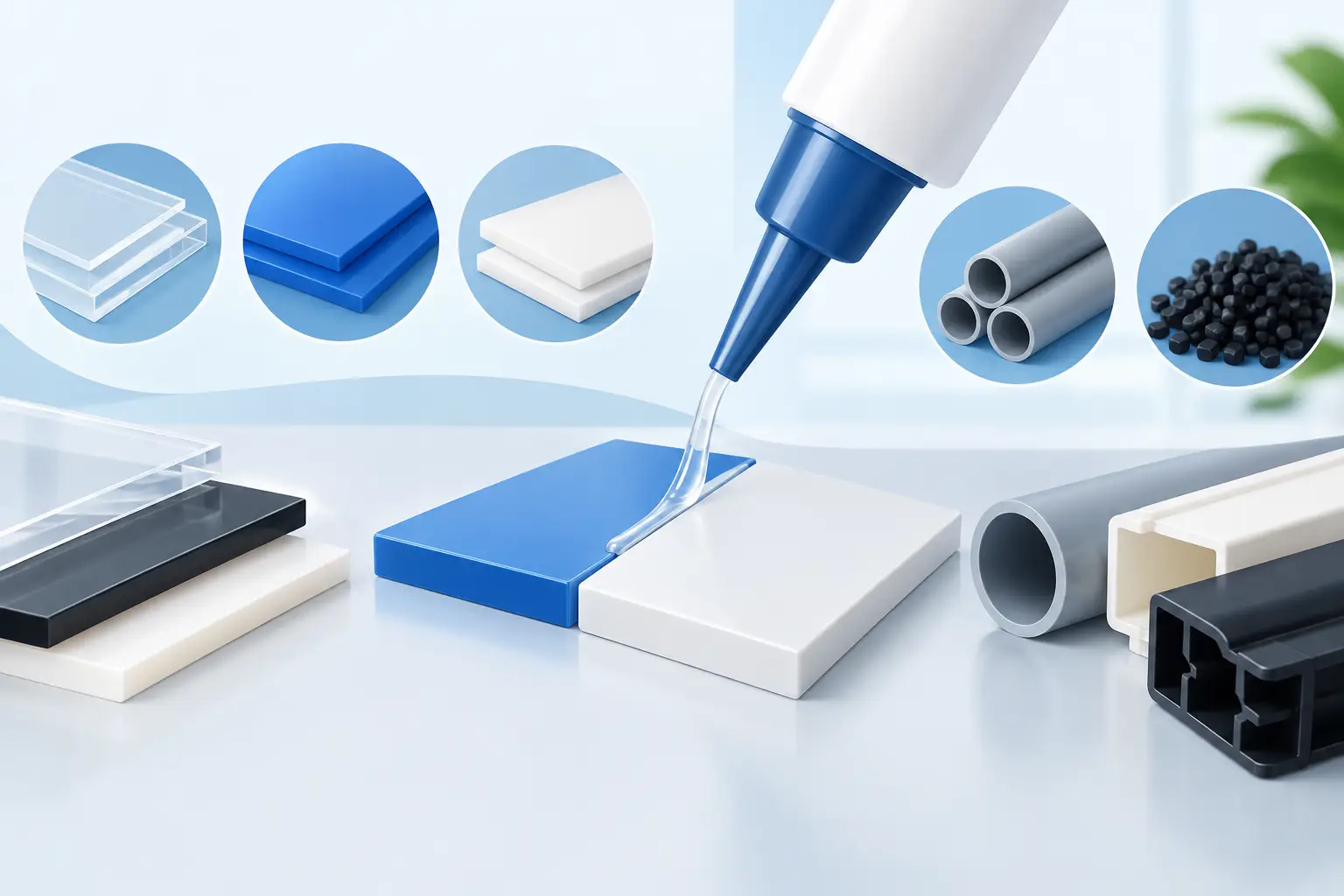
Adhesive Plastic Compatibility for Strong Bonds
A bond can look sound at installation and still fail weeks later under heat, vibration, moisture, or cleaning chemicals. Adhesive plastic compatibility is the control point that determines whether an assembly delivers long-term strength or creates costly rework. For contractors, manufacturers, and maintenance teams, selecting by adhesive type alone is not enough. The plastic substrate, its surface condition, and its service environment must all be evaluated together.
Why Plastic Bonding Requires More Control
Plastics are not one material category. ABS, PVC, polycarbonate, acrylic, nylon, polyethylene, polypropylene, and thermoplastic elastomers each respond differently to adhesives. Some plastics bond readily with common construction adhesives or tapes. Others resist wetting so strongly that even a high-strength adhesive cannot establish a dependable connection without surface treatment or a specialized formulation.
The main reason is surface energy. High-surface-energy plastics allow adhesive to spread across the substrate and form intimate contact. PVC, ABS, acrylic, and polycarbonate are generally more receptive when properly cleaned. Low-surface-energy plastics, especially polyethylene and polypropylene, repel many adhesives. Their surfaces prevent the adhesive from wetting out, reducing the actual bonding area even when the bead or tape appears fully applied.
This distinction matters on jobs where performance is visible only after the project is complete. A loose trim panel, failed equipment label, detached cable clip, leaking plastic fitting, or separated automotive component can lead to downtime, warranty exposure, and repeat labor. Material compatibility should therefore be defined before products reach the work area.
Adhesive Plastic Compatibility Starts With the Substrate
The first question is not, “What adhesive is strongest?” It is, “What plastic am I bonding?” Identify the polymer whenever possible through drawings, component specifications, supplier information, or markings molded into the part. This step avoids a common failure: using a proven adhesive on an unknown plastic and assuming the same result will apply.
PVC is commonly used in piping, trims, cable management, and construction components. It often accepts compatible solvent cement systems, sealants, acrylic adhesives, and certain tapes, depending on whether the plastic is rigid or flexible. Plasticizers in flexible PVC can migrate over time and affect bond durability, so the application must be tested under actual conditions.
ABS is widely used for housings, automotive parts, and fabricated components. It generally provides a more bondable surface than low-energy polyolefins, but stress cracking can occur when incompatible solvents or aggressive adhesives are used. Acrylic and compatible structural systems can provide strong performance, provided the product does not attack the substrate.
Polycarbonate is valued for impact resistance and transparency in guards, covers, and glazing applications. It can bond well, but it is sensitive to chemical attack. A product that develops high initial strength may still cause crazing or cracking over time. Testing is essential where appearance, transparency, or load-bearing performance matters.
Polyethylene and polypropylene require special attention. These low-surface-energy plastics are common in tanks, packaging, liners, automotive parts, and industrial containers. General-purpose silicone, contact adhesive, or standard double-sided tape may not deliver a reliable long-term bond. A purpose-designed low-surface-energy adhesive, primer, or surface activation process is usually required.
Nylon can be difficult for a different reason. It absorbs moisture, and its dimensions can change with humidity and temperature. The adhesive must tolerate movement while maintaining adhesion. In load-bearing or machinery applications, evaluate moisture exposure and service temperature before setting a bond specification.
Surface Preparation Determines Real Bond Strength
An adhesive cannot compensate for contamination. Dust, mold-release agents, processing oils, fingerprints, polishing compounds, and plasticizer migration can all interfere with adhesion. This is especially relevant for new molded parts, automotive components, and industrial plastics handled repeatedly during assembly.
Start with cleaning. Use a cleaner suitable for the plastic and the contaminant, then allow the surface to dry completely. Avoid assuming that a strong solvent improves preparation. Some solvents soften or damage plastics, leave residues, or create stress cracking. The cleaning method must be compatible with the substrate as well as the adhesive.
For receptive plastics, light abrasion can increase surface area and provide a better mechanical key. The surface should then be cleaned again to remove sanding debris. Abrasion is not a universal solution, however. It does not change the low surface energy of polyethylene or polypropylene enough to guarantee performance.
When bonding low-energy plastics, surface activation may be necessary. Flame treatment, corona treatment, plasma treatment, or a compatible primer can raise surface energy and improve adhesive wetting. These methods can be highly effective, but process control matters. Treatment intensity, timing, cleanliness, and storage conditions all affect results. A treated component left exposed to contamination may lose much of the intended benefit.
Allow the Adhesive to Wet Out
Good bonding begins before cure. The adhesive must spread across the plastic instead of sitting on it like a bead of water. Apply the correct amount of material, then use sufficient pressure to create full contact. With pressure-sensitive tapes, this pressure is often the difference between a temporary hold and a durable attachment.
Do not judge a bond by immediate handling strength alone. Many adhesive chemistries need time to build full performance. Moving, loading, or exposing the assembly before the specified cure or dwell period can weaken the finished bond.
Match the Adhesive to the Working Environment
Plastic compatibility extends beyond whether an adhesive sticks on day one. The complete joint must withstand the environment where it will operate. A material suitable for an indoor sign may not be suitable for an HVAC installation, exterior cladding detail, vehicle trim, or industrial production line.
Temperature is a primary factor. Heat can soften certain plastics, reduce tape holding power, accelerate plasticizer migration, or weaken an adhesive. Cold can make a substrate more brittle and reduce adhesive flexibility. Where thermal cycling is expected, choose a system that can accommodate different expansion rates between plastic, metal, glass, or painted surfaces.
Moisture and chemicals require the same discipline. Water exposure can affect bond lines and substrate surfaces, while cleaning agents, fuels, oils, coolants, and disinfectants may attack either the adhesive or the plastic. For MEP, automotive, and facilities maintenance applications, specify resistance based on the actual chemicals present, not a general claim of durability.
Joint design also matters. Adhesives perform best when the load is distributed across the bond area. Peel and cleavage forces concentrate stress at an edge and are more likely to cause failure, especially on rigid plastics. A wider overlap, a supported joint, or a mechanical feature that reduces peel can significantly improve service life.
A Practical Qualification Method
Before approving an adhesive for production or project use, test the actual material combination. Use the same plastic grade, surface preparation, adhesive application method, cure time, and expected service conditions. A test performed on a clean, flat sample in a controlled workshop may not represent a dusty job site or a component exposed to daily vibration.
For critical applications, assess initial adhesion, cured bond strength, peel resistance, and behavior after heat, cold, moisture, or chemical exposure. Also inspect the failure mode. Adhesive failure at the plastic surface may indicate poor compatibility or contamination. Cohesive failure within the adhesive can indicate that adhesion exceeds the internal strength of the material. Substrate damage may show that the bond is stronger than the plastic itself.
Document the result and standardize the process. Record the plastic type, cleaning method, primer or treatment, adhesive batch, application temperature, assembly pressure, and cure time. This creates repeatability across crews, shifts, facilities, and distribution channels.
Common Selection Mistakes
The most expensive bonding errors usually begin with simple assumptions. One is selecting a product because it performed well on metal, wood, or painted surfaces. Another is treating all plastics as equivalent. A third is using a high-viscosity adhesive to fill a gap when the real issue is poor surface energy.
Avoid specifying a product only by its advertised strength. Tensile strength may be relevant, but it does not explain resistance to peel, vibration, UV exposure, heat cycling, or chemicals. The right adhesive is the one that performs on the specific plastic, in the actual joint design, through the full service life required.
For professional applications, a compatible system may include more than one product: a cleaner, surface treatment or primer, adhesive or tape, and a defined curing process. This is not unnecessary complexity. It is the disciplined method for reducing failures where durability and dependable output matter.
The Engineer approach is built around this principle: specify the bond for the material and operating condition, then apply it with controlled preparation. A properly matched adhesive does more than hold parts together. It protects project quality, reduces corrective work, and gives every installation a stronger basis for reliable service.



Leave a Reply