

Choosing Sealant for Plumbing Pipe Threads
A threaded joint can look complete, pass an initial pressure check, and still become the source of a costly callout weeks later. The right sealant for plumbing pipe threads fills the helical leak path between mating threads while supporting secure assembly, serviceability, and long-term system reliability. For contractors, maintenance teams, and procurement managers, this is not a minor consumable decision. It affects rework, downtime, material compatibility, and confidence in the finished installation.
Why Threaded Pipe Joints Need Sealant
Pipe threads are designed to create mechanical engagement, not necessarily a perfectly fluid-tight barrier on their own. Even tightly assembled threads contain microscopic gaps along the spiral path created when the male and female fittings mate. Water, air, compressed gas, and some process fluids can travel through that path under pressure.
A quality thread sealant closes those gaps and lubricates the joint during assembly. Lubrication matters because dry threads can bind or gall, especially on stainless steel and other metal fittings. It also helps the installer achieve proper engagement without applying excessive torque that can crack a fitting, distort a valve body, or damage plastic components.
The operating conditions determine what “quality” means. A domestic cold-water line, a hot-water recirculation system, a compressed-air network, and a chemical process line do not demand the same formulation. The selected product must match the thread form, pipe material, service media, pressure, temperature, and maintenance requirements.
Select a Sealant for Plumbing Pipe Threads by Application
The first question is whether the connection uses tapered pipe threads or straight threads. Tapered threads, such as common NPT connections, tighten progressively and typically rely on a sealant to prevent leakage. Straight threads may require a gasket, O-ring, washer, or face seal instead. Applying thread sealant to a straight-thread fitting does not replace the sealing element specified by the fitting manufacturer.
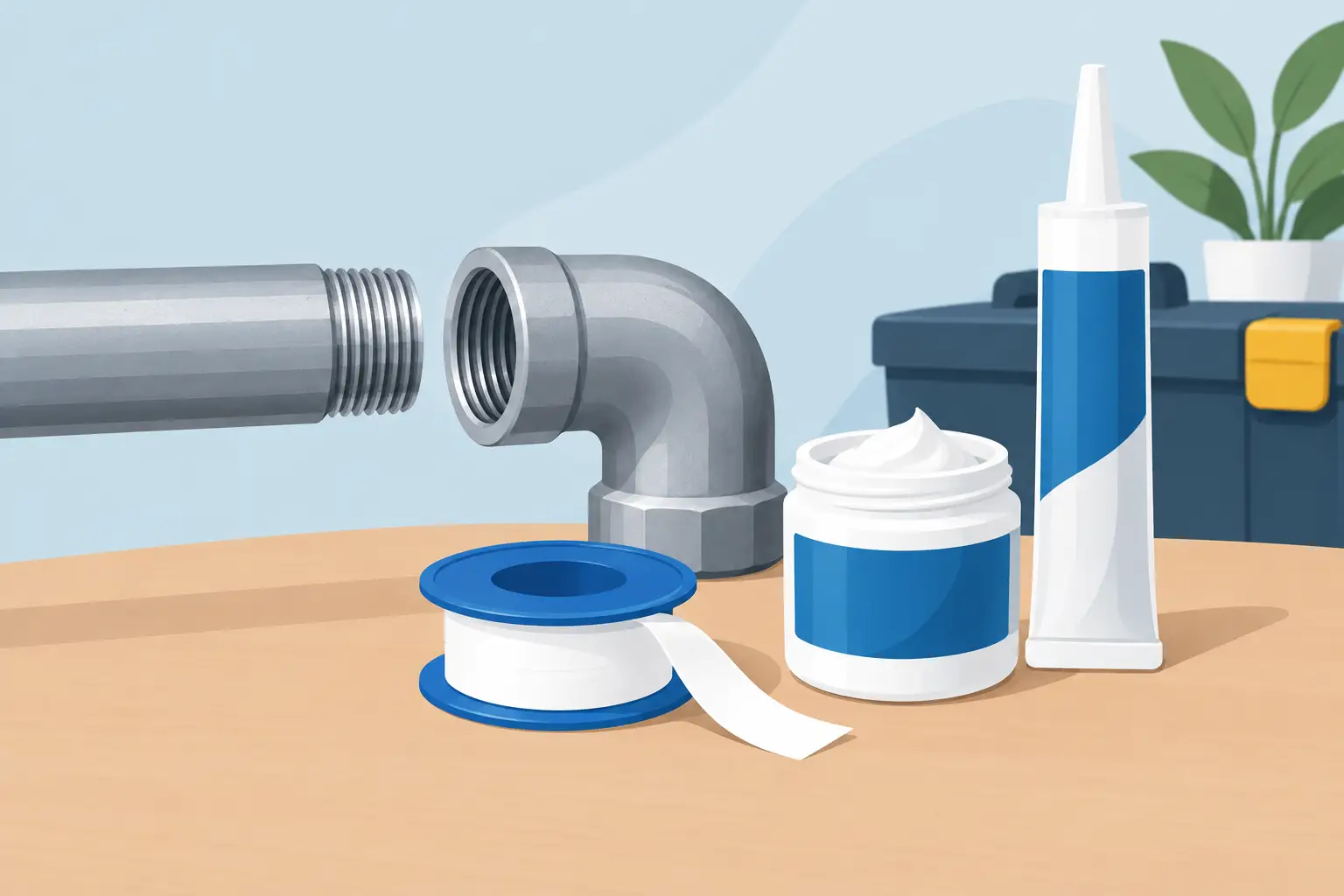
For standard water and general plumbing work, PTFE thread seal tape remains a practical option. It is clean, easy to carry, and well suited to many threaded metal and plastic connections when applied correctly. Tape is especially useful where a fast, dry installation is required. However, inconsistent wrapping, excess tape, or tape applied over the first thread can create leaks or introduce fragments into valves and sensitive equipment.
PTFE-based thread sealant paste, often called pipe joint compound, offers better control on many demanding installations. It conforms to irregularities, stays where it is applied, and can provide reliable sealing across a broad range of metal-thread applications. Premium pastes are often preferred for larger diameters, fittings that will be adjusted during alignment, and maintenance work where installers need a visible, consistent coating.
Anaerobic thread sealants are engineered primarily for metal-to-metal threaded connections. They cure in the absence of air between close-fitting metal surfaces, creating a durable seal that resists vibration and pressure. This makes them a strong choice for suitable industrial systems, hydraulic connections, and compressed-air applications. They are not a universal replacement for tape or paste. Cure behavior, disassembly requirements, and compatibility with plastics or nonmetallic fittings must be confirmed before use.
For plastic threaded fittings, use particular care. Many plastics can split when over-tightened, and some chemical formulations may not be appropriate for every polymer. A compatible non-hardening paste or approved tape can be effective, but the goal is controlled sealing with limited torque. More turns are not automatically better.
Match the Product to the Service Medium
Water service is common, but water quality and temperature still matter. Hot water, glycol mixtures, treated water, and high-mineral water can change the demands placed on the joint. For potable-water systems, select a product approved for the required drinking-water application and local code requirements.
Gas, fuel, refrigerant, compressed air, and chemical lines require more specific verification. A sealant that performs well on water may not be suitable for hydrocarbons, oxygen service, aggressive chemicals, or high-purity systems. The same principle applies to HVAC and MEP work: verify compatibility with the actual fluid, expected temperature range, and pressure rating rather than selecting by appearance or habit.
Installation Quality Determines Seal Performance
Even an advanced formulation cannot compensate for damaged threads or poor preparation. Before applying sealant, inspect both mating parts. Remove old tape, hardened compound, rust, oil contamination, metal chips, and debris. Threads should be clean and undamaged, with no cross-threading, flattening, or cracking.
When using tape, begin one thread back from the pipe end. Wrap in the direction of tightening so the tape is pulled into the threads rather than unwound as the fitting turns. Maintain tension and use enough wraps to cover the threads evenly without creating a bulky layer. The correct number of wraps depends on tape thickness, pipe size, and thread condition, so product instructions should govern the application.
For paste sealant, apply a uniform coating to the male threads. Many professionals also use a light coating on the female fitting where the product instructions allow it, particularly on larger or rougher threads. Avoid excessive application. Excess compound can migrate into the piping system, contaminate strainers, or interfere with valve operation.
Anaerobic products require clean, properly fitted metal threads and the correct cure conditions. Apply the product as specified, assemble promptly, and allow the stated cure time before pressurizing the line. Low temperatures, large thread gaps, passive metals, and contaminated surfaces can affect cure speed. Treat the technical data as part of the installation procedure, not as optional paperwork.
Tighten the joint to the fitting manufacturer’s recommended engagement and orientation. Do not use thread sealant as permission to over-torque. If alignment is required, choose a sealant designed to allow adjustment, or plan the assembly sequence so the fitting reaches its final position without backing off excessively.
Common Failures and What They Reveal
A leaking threaded connection often points to a process failure rather than a defective product. Tape wrapped backward can unravel during tightening. Tape placed over the first thread can shred into the system. Too little sealant leaves a leak path, while too much can prevent correct thread engagement.
Another common issue is using the wrong sealant for the substrate. An anaerobic metal-thread product may be unsuitable for a plastic fitting. A general-purpose compound may not resist the fluid in a fuel, chemical, or high-temperature line. A sealant selected without checking the application can create a joint that passes at startup but fails under heat, pressure cycling, or vibration.
Thread condition is equally significant. Deeply corroded, mismatched, or damaged threads cannot be made reliable simply by adding more sealant. Replace compromised fittings where necessary. The material cost is small compared with the disruption of a leak in a finished ceiling, plant room, equipment skid, or production area.
Build Thread Sealing into Your Material Standard
For recurring work, standardizing the approved sealant for plumbing pipe threads improves installation consistency across crews and sites. Procurement teams should evaluate products on more than unit price. Consider material compatibility, pressure and temperature capability, relevant approvals, shelf life, ease of application, clean-up needs, and availability across the required package sizes.
A well-defined range also makes training easier. Technicians should know which product is approved for potable water, general metal piping, plastic threaded fittings, compressed air, and specialized industrial media. Clear selection rules reduce improvised substitutions that can introduce risk into critical systems.
The Engineer performance-focused sealing solutions are designed for professional environments where dependable application and consistent supply matter. The best choice remains application-specific: use the product that meets the joint design and service conditions, then apply it with the same discipline used for every other critical connection.
A threaded joint is a small part of a larger system, but it carries the full pressure of that system. Specify the sealant carefully, prepare the threads properly, and make every connection one that stays sealed after the crew has left the site.


Leave a Reply