

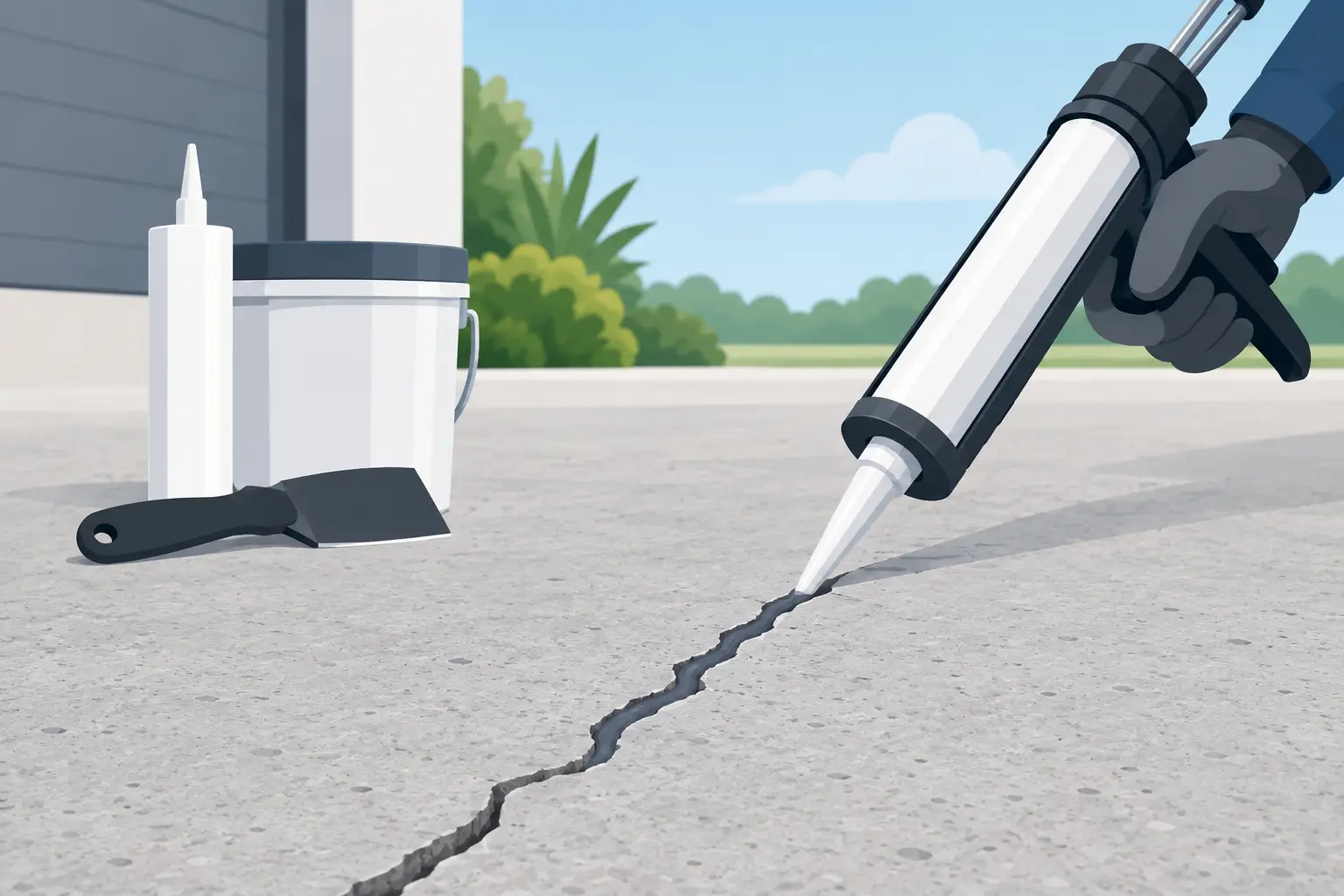
Choosing Concrete Crack Sealant for Lasting Repairs
A concrete crack is rarely just a cosmetic issue. In slabs, walls, curbs, loading areas, and service yards, an open crack creates a direct path for water, chlorides, dirt, and chemicals. The right concrete crack sealant helps control that path before it becomes spalling, corrosion, coating failure, or an avoidable maintenance callout.
For contractors and maintenance teams, the objective is not simply to fill a visible line. It is to select a material that matches the crack condition, environmental exposure, expected movement, and service demands of the concrete. A sealant that looks acceptable on day one but tears, debonds, or softens under traffic will create rework rather than protection.
What Concrete Crack Sealant Is Designed to Do
Concrete crack sealant is a flexible or semi-rigid material applied to cracks and joints to limit moisture and contaminant intrusion. Depending on the formulation, it can also accommodate movement caused by temperature changes, vibration, settlement, and normal slab expansion and contraction.
It should not be confused with a structural repair product. If a crack results from active settlement, overloading, reinforcement corrosion, or a structural defect, sealing alone will not restore the concrete’s load-bearing capacity. The underlying cause must be assessed first. For a dormant surface crack or a properly prepared moving crack, however, a compatible sealant is a practical first line of defense.
The performance target changes by application. A warehouse floor requires resistance to abrasion, wheeled traffic, cleaning chemicals, and impact. An exterior wall crack requires strong adhesion and weather resistance under heat, UV exposure, and rain. A crack around MEP penetrations may need flexibility, low odor, and compatibility with adjacent substrates.
Choose Concrete Crack Sealant by Crack Behavior
The most reliable specification begins with one question: is the crack dormant or moving?
A dormant crack has stabilized. It may have formed during curing, shrinkage, or an earlier event and no longer changes significantly in width. Rigid or semi-rigid repair materials can be suitable where movement is not expected and where the repair must support floor edges or resist hard-wheel traffic.
A moving crack changes in width over time. Exterior slabs, precast panels, parapets, and areas exposed to temperature variation often fall into this category. These cracks need an elastomeric sealant with sufficient movement capability. A rigid filler placed into an active crack may fracture again as the concrete moves.
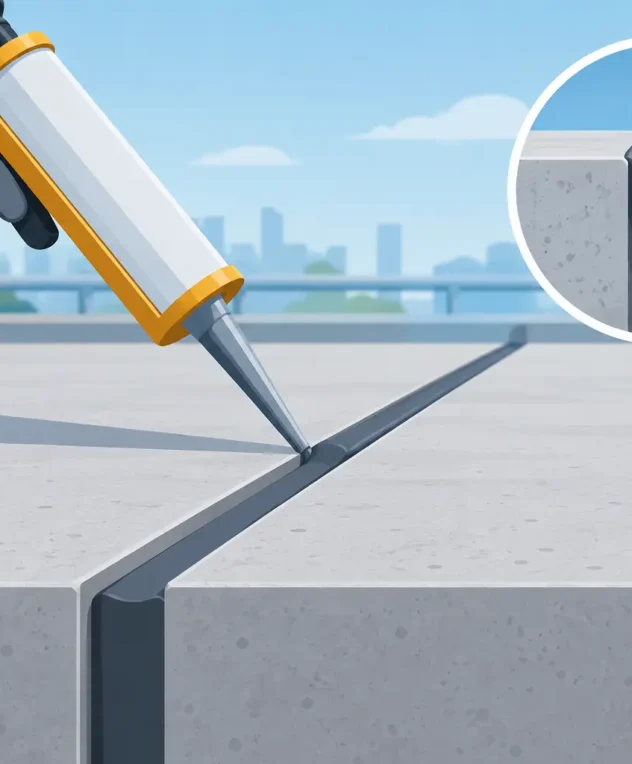
Crack width also matters. A hairline crack may need routing or opening before sealant can be placed effectively. A very narrow surface opening does not provide enough material depth or bond area for many sealants. Wider cracks may require a backer material or bond breaker to control sealant depth and prevent three-sided adhesion.
Three-sided adhesion occurs when sealant bonds to both crack walls and the bottom of the crack. This restricts movement and increases stress in the sealant bead. Proper joint geometry allows the material to stretch and compress as intended rather than tearing away from the concrete edges.
Match the Material to the Service Environment
Sealant selection should account for conditions after installation, not only during application. Review the expected exposure to water, direct sunlight, dust, fuels, oils, detergents, and process chemicals. In industrial facilities, confirm whether the area is subject to washdowns, forklift traffic, thermal cycling, or vibration from equipment.
Polyurethane sealants are often selected where flexibility, adhesion, and weather resistance are required. They can suit many exterior and general construction applications, provided the product is compatible with the substrate and service environment.
Silicone sealants offer strong weathering and UV resistance, making them useful for certain exterior glazing, facade, and non-traffic applications. Their limitations should be considered where paintability, contamination risk, or adhesion to particular coatings is a concern.
Hybrid polymer sealants can provide a practical balance of adhesion, flexibility, and application convenience. They may be appropriate for maintenance work where multiple substrates or variable site conditions are involved. For industrial floors and high-load traffic areas, semi-rigid joint fillers or specialized floor repair systems may be the better choice, particularly when joint edge support is required.
No single chemistry is best for every crack. The correct product is the one that performs under the actual operating conditions of the asset.
Surface Preparation Controls the Result
Even a premium sealant cannot compensate for weak preparation. Concrete is porous, often dusty, and may contain curing compounds, paint, old sealant, oil, or moisture that interferes with adhesion. Most early sealant failures begin at the substrate interface, not within the sealant itself.
Start by inspecting the full crack length. Look for loose edges, continuing movement, moisture staining, efflorescence, and areas where the crack branches or widens. Remove failed filler and weak concrete until sound material is reached. Routing may be necessary to create a consistent opening that can accept the specified sealant profile.
Clean the crack thoroughly using methods appropriate for the site and product system. Mechanical cleaning, vacuum removal, and dry compressed air are common approaches. Avoid driving dust deeper into the crack. If oil or chemical contamination is present, cleaning must remove the contaminant rather than merely spreading it across the concrete surface.
Moisture condition requires equal attention. Some sealants tolerate damp concrete, while others require a dry substrate for dependable adhesion. Do not assume that a surface that appears dry has no moisture within the crack. Review the product requirements, ambient conditions, and expected weather before starting work.
Where a primer is specified, apply it consistently and allow the required flash time. Primers add time to the process, but on difficult, porous, or highly exposed substrates, they can significantly improve bond reliability. Skipping this step to accelerate installation often shifts cost into future repairs.
Apply for Correct Bead Geometry
A sealant bead must have the right depth and shape to move effectively. Deep, narrow beads can become too stiff. Shallow, wide beads may lack durability. Product instructions and project specifications should determine the final geometry, especially for expansion joints and wider cracks.
Install backer rod where needed to control depth and establish a bond-breaking surface at the bottom of the joint. Choose a backer rod diameter that compresses sufficiently within the opening without being damaged during installation. Closed-cell and open-cell backer materials have different uses, so the choice should match the sealant type and project conditions.
Apply sealant with steady pressure to fill the crack from the bottom upward and avoid trapped air. Tool the bead promptly to press the material against both crack faces and produce a smooth, continuous finish. In exposed locations, neat tooling also reduces water pooling and improves the finished appearance.
Observe temperature and curing limits. Very hot concrete can reduce workability and cause rapid skin formation. Cold conditions can slow cure and affect adhesion. Traffic, washdown, or coating work should not resume until the sealant has achieved the required cure state.
Avoid the Most Common Repair Failures
Failure patterns are useful diagnostic tools. Adhesive failure, where the sealant pulls cleanly away from the concrete, commonly points to dust, contamination, moisture, poor preparation, or an incompatible product. Cohesive failure, where the sealant splits within itself, may indicate excessive movement, insufficient bead geometry, or a material with inadequate movement capability.
Other recurring problems include filling active cracks with rigid products, applying material over old failed sealant, neglecting crack routing, and opening an area to traffic too soon. Each can make a repair appear complete while reducing its service life.
For project managers and procurement teams, consistency matters as much as individual product performance. Specify the required chemistry, movement capability, color, packaging, cure profile, and compatible accessories. This reduces substitution risk across crews, sites, and maintenance cycles. A dependable supplier with a practical industrial range also helps standardize application methods and simplify replenishment.
Build Crack Repair Into Preventive Maintenance
Crack sealing is most cost-effective before water has reached reinforcement, subbase materials, or adjacent finishes. Include concrete inspections in scheduled facility maintenance, particularly after seasonal temperature changes, heavy rainfall, equipment installation, or changes in traffic patterns.
Record crack locations, widths, exposure conditions, and repair dates. If a sealed crack reopens, that record helps determine whether the issue is product selection, installation quality, or ongoing structural movement. It also supports better planning for shutdowns, materials, and labor.
The Engineer approach is built around this practical standard: specify for the environment, prepare the substrate precisely, and use materials that remain dependable after the crew leaves the site.
A well-sealed crack is a small repair with a larger purpose. It protects concrete from the conditions that turn minor defects into expensive disruption, while giving maintenance teams a controlled, repeatable path to longer service life.



Leave a Reply