

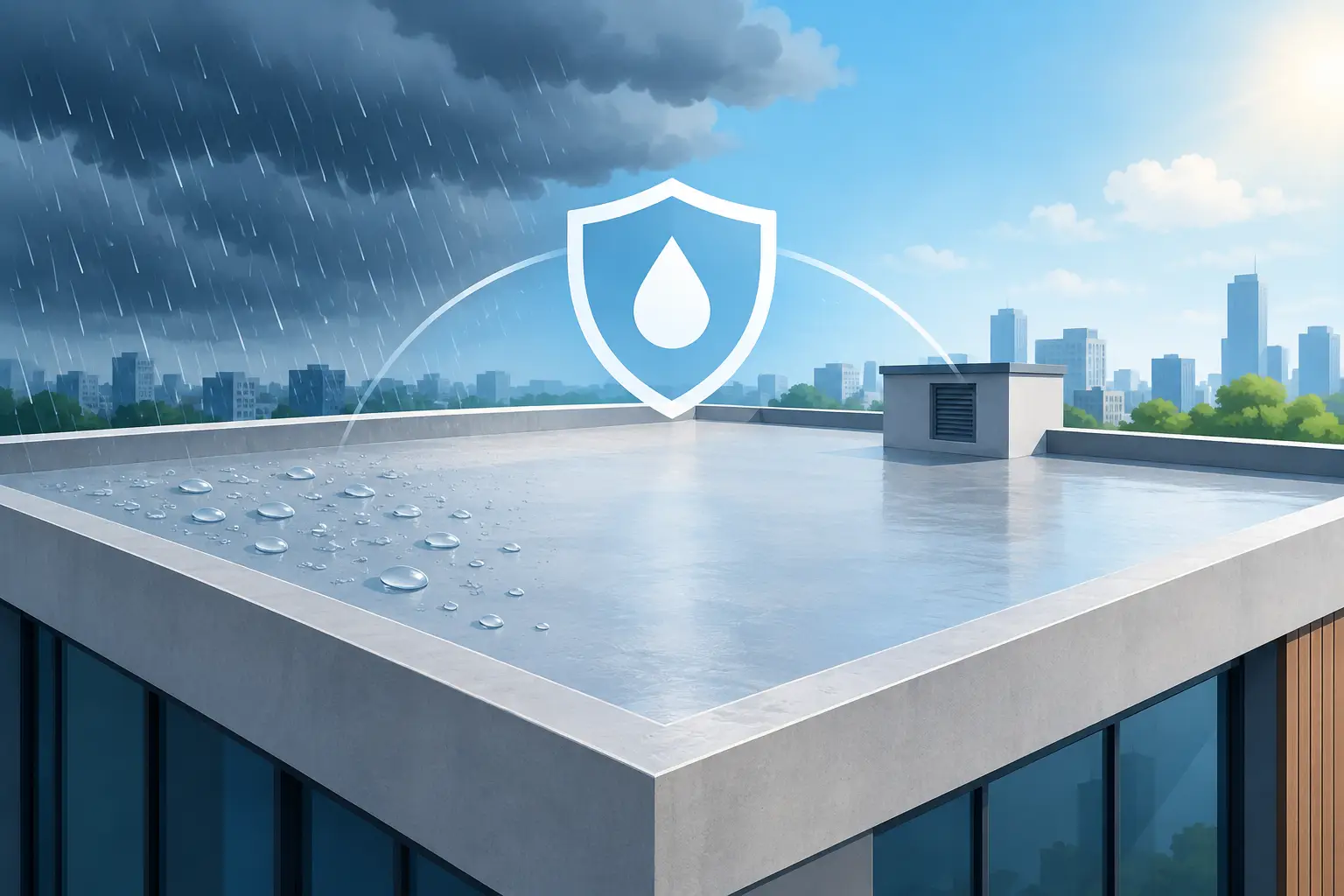
Waterproof Concrete Roofs That Resist Failure
A concrete roof can look solid long after its waterproofing system has begun to fail. Hairline cracks, open penetrations, weak parapet terminations, and ponding water often allow moisture to move below the surface before an interior leak becomes visible. Waterproof concrete roofs require more than applying a coating over a slab. They require a compatible system built around substrate condition, movement, drainage, and disciplined application.
For contractors, facility teams, and project managers, the objective is clear: prevent water ingress before it damages insulation, reinforcement, ceiling finishes, equipment, or occupied spaces below. A reliable roof waterproofing specification reduces call-backs, protects the building envelope, and gives procurement teams greater confidence in long-term maintenance planning.
Why Concrete Roofs Leak
Concrete is durable, but it is not inherently waterproof. Its pores and capillaries can absorb and transmit moisture, particularly where curing was inconsistent or the surface has deteriorated. Water also finds the weakest route. On a roof, that route is rarely the center of an open slab. It is usually a joint, drain, pipe penetration, parapet corner, construction cold joint, or crack.
Thermal movement adds another challenge. Roof slabs expand under direct sun and contract as temperatures fall. In areas with strong solar exposure, this daily movement can stress rigid waterproofing layers, especially at transitions between horizontal and vertical surfaces. A system that bonds well but cannot accommodate movement may split where the roof needs protection most.
Standing water accelerates the problem. Waterproofing materials are designed for exposure, but prolonged ponding can expose weak adhesion, poor overlap work, pinholes, and insufficient film thickness. Drainage is therefore part of waterproofing performance, not a separate consideration.
Start With the Roof, Not the Product
Selecting a membrane or liquid coating before inspecting the substrate is a common source of failure. The same product can perform very differently on sound, dry concrete than on a dusty slab with active cracks and trapped moisture.
A proper assessment should establish whether the roof has existing leaks, loose old coatings, efflorescence, oil contamination, spalled concrete, or damaged screed. It should also identify the roof slope, drain locations, penetration details, expansion joints, and areas where water remains after rain or cleaning. These conditions determine the preparation work and the type of waterproofing system that will fit the project.
Moisture within the slab deserves particular attention. Some coatings and membranes require a dry substrate to achieve dependable adhesion. Applying them over damp concrete can trap vapor beneath the waterproofing layer, leading to blisters or debonding. Where moisture cannot be avoided, the specification may require a compatible primer, moisture-tolerant material, or a system designed for that condition.
Repair Defects Before Waterproofing
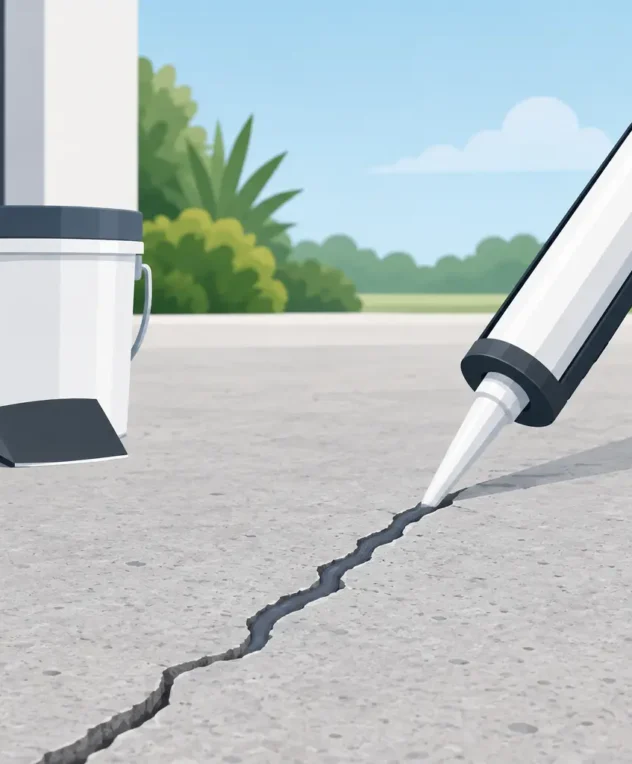
Waterproofing is not a substitute for concrete repair. Cracks, honeycombing, failed joints, and damaged edges should be repaired before the main membrane is installed. Static hairline cracks may be bridged by certain flexible systems, but active cracks and movement joints require treatment that allows controlled movement.
Cleanliness matters just as much. Dust, laitance, loose particles, curing compounds, and oil residues can prevent a coating from bonding to concrete. Mechanical preparation, pressure washing followed by full drying, grinding, or other approved methods may be needed depending on the substrate and system. The goal is a sound, clean surface with the correct profile for adhesion.
Choosing a System for Waterproof Concrete Roofs
There is no single best waterproofing material for every concrete roof. The right choice depends on roof geometry, exposure, expected movement, traffic level, installation conditions, maintenance access, and required service life.
Liquid-applied waterproofing is often effective on complex roofs with many penetrations, upstands, and irregular details. When installed at the specified coverage rate, it creates a continuous protective layer without many of the seams associated with sheet materials. Its performance depends heavily on surface preparation, dry film thickness, reinforcement at critical points, and proper curing conditions.
Sheet membranes can provide consistent thickness and strong resistance across large, open roof areas. They are especially practical where a trained installation crew can create secure laps and terminations. Their limitations are usually found at complicated detailing, where every seam, corner, and transition must be completed with precision.
Cementitious waterproofing materials may suit protected concrete areas, wet service spaces, or specific roof build-ups. However, they are generally less suited to exposed roofs that experience significant thermal movement unless the selected formulation is specifically designed for flexibility. Acrylic, polyurethane, and other elastomeric coating technologies may offer stronger movement accommodation, but each requires compatibility checks with primers, topcoats, and existing surfaces.
For professional applications, product selection should be based on technical fit rather than price per pail or roll. A lower-cost system that needs early repair can increase labor expense, disrupt operations, and damage confidence in the contractor or facility team. Performance begins with the formulation, but it is proven by the complete installed assembly.
Details Control Roof Performance
Most waterproofing failures occur at details rather than broad field areas. These locations need additional attention, suitable sealants, and often reinforcing fabric or preformed accessories.
Drains and Scuppers
Drains must be clean, securely fixed, and correctly integrated into the membrane. The waterproofing layer should direct water into the drain body without gaps or reverse laps that can hold moisture. A roof can have a high-quality membrane and still leak if the drain connection is weak.
Scuppers and overflow outlets should also be assessed for capacity. If a primary drain blocks, overflow provisions help prevent water from building up against parapets or entering vulnerable transitions.
Parapets, Upstands, and Corners
Horizontal-to-vertical transitions experience stress from movement and water flow. Sharp 90-degree corners can place excessive strain on a membrane, so a cove or fillet is often used to create a smoother transition. The waterproofing should extend to the required height on parapets and be terminated with a secure detail that prevents water from tracking behind it.
Metal flashings, termination bars, compatible sealants, and mechanical fixings must be selected as part of the system. Mixing unrelated materials without confirming compatibility can lead to staining, softening, adhesion loss, or early failure.
Penetrations and Joints
Pipes, supports, conduits, and HVAC curbs create concentrated risk. Every penetration should have enough clearance for the waterproofing assembly to turn up and form a continuous seal. Movement joints must never be treated as ordinary cracks. They require a joint system designed to accommodate anticipated movement while maintaining a watertight barrier.
Installation Discipline Protects the Investment
Even advanced waterproofing materials cannot compensate for poor site control. Application should follow manufacturer requirements for substrate preparation, primer use, mixing, temperature range, humidity, coverage rate, cure time, and protection from rain or dust during installation.
Thickness is a recurring issue with liquid-applied systems. A coating that looks uniform may still be too thin to deliver the specified waterproofing performance. Installers should measure consumption by area, confirm wet-film or dry-film thickness where applicable, and apply additional material at details. Skipping these checks can turn a premium material into an underperforming roof layer.
Weather planning is equally important. Applying coatings immediately before rain, over hot surfaces beyond the allowed temperature range, or during high humidity can affect cure and adhesion. On active sites, roof access must also be controlled after application. Foot traffic, dragged equipment, sharp objects, and follow-on trades can puncture an otherwise sound membrane.
A quality inspection before covering the system is worth the time. Check for missed areas, pinholes, thin edges, open seams, inadequate terminations, and incomplete reinforcement. Where appropriate, controlled flood testing can identify defects before protective layers, pavers, insulation, or equipment make repairs more difficult.
Plan for Maintenance, Not Just Handover
A waterproof roof needs periodic inspection. Debris around drains, damaged flashings, new service penetrations, and unapproved repairs can compromise a previously reliable system. Facility teams should inspect the roof after major weather events and before seasonal rainfall, then document defects while they remain small and economical to correct.
Repairs should use compatible materials. Applying a random sealant or coating over a leak may create a temporary patch but can prevent proper adhesion during later repairs. Keeping records of the original system, primers, topcoats, and repair materials gives maintenance teams a clearer path when intervention is needed.
For contractors and distributors, dependable supply also matters. A waterproofing system is only as practical as the ability to source compatible primers, membranes, sealants, reinforcement materials, and repair products when the project schedule demands them. Performance-led ranges such as The Engineer support professional work by connecting essential protective materials with consistent quality expectations.
The best time to protect a concrete roof is before water reaches the ceiling below. Specify the system around the roof’s real conditions, prepare every surface with care, and treat drains, joints, and penetrations as critical engineering details rather than finishing work.


Leave a Reply